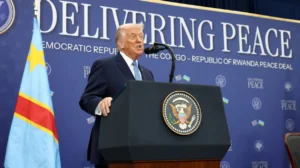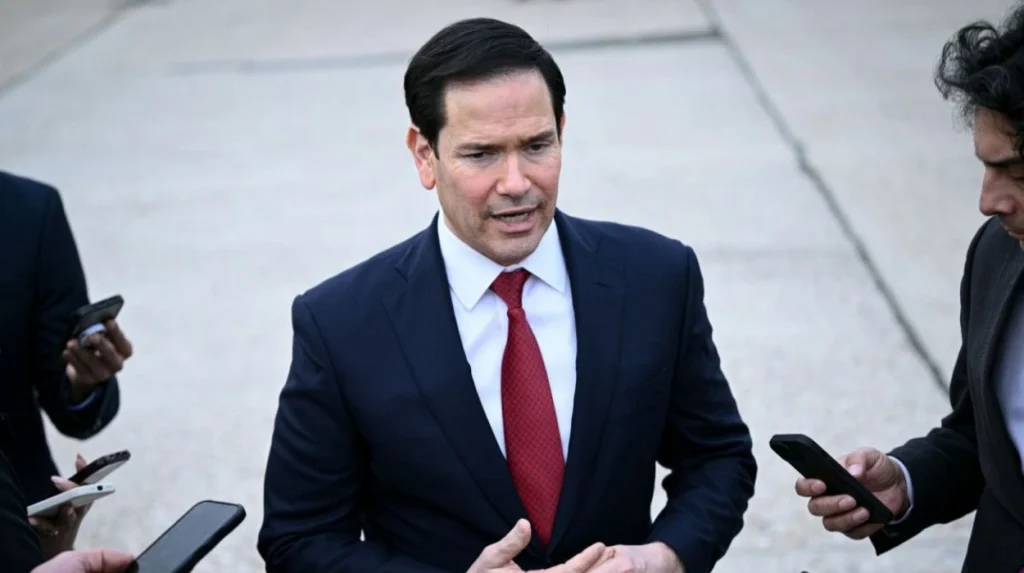
The phrase “two to four weeks more” has quickly become the most discussed benchmark in Washington’s current messaging on the conflict with Iran. U.S. Secretary of State Marco Rubio introduced the timeline during diplomatic consultations in early 2026, suggesting that the current phase of operations is designed to conclude within a matter of weeks rather than months. That formulation mirrors earlier remarks from President Donald Trump, who initially described the campaign as a compressed military effort with defined operational goals.
The importance of this timeline lies less in its precision and more in its signaling effect. By presenting a relatively short horizon, U.S. officials appear to be balancing domestic political expectations with international concerns about escalation. Military campaigns rarely follow strict calendars, yet public timelines often shape diplomatic positioning and market responses, especially when the conflict involves strategic waterways and global energy supply routes.
Why does a limited timeline matter for allies?
Allies in Europe and the Middle East have been closely parsing the language used by Washington. A commitment to weeks rather than months suggests an attempt to reassure partners that the conflict is not expected to evolve into a prolonged regional war.
However, diplomats observing recent briefings note that such messaging also reflects caution within the administration about the reputational risks of an open-ended campaign. Past conflicts in the region demonstrated how initial projections can expand under changing battlefield conditions, a factor that continues to influence allied skepticism.
The influence of early war projections
Early projections from U.S. officials framed the operation as a swift military campaign designed to weaken Iranian missile infrastructure and maritime capabilities. As the conflict moved beyond its first month, Rubio’s revised timeframe effectively acknowledged that initial estimates required adjustment while still maintaining the broader narrative of a limited war.
This recalibration highlights a familiar tension between operational progress and political communication. Governments often emphasize success indicators even as timelines shift, attempting to preserve confidence among domestic and international audiences.
From Trump’s early projection to Rubio’s adjusted estimate
Initial remarks by Trump during the early phase of the conflict placed the expected duration of high-intensity operations within a roughly four-to-six-week window. Those statements established the baseline expectation that the campaign would remain concentrated and targeted rather than evolving into a drawn-out conventional confrontation.
Rubio’s more recent assessment extends that window while maintaining the overall framing. The adjustment suggests that Washington anticipates additional operational steps, particularly involving maritime security and the protection of regional shipping lanes. Such developments underscore how military planning must adapt to shifting tactical realities.
Diplomatic recalibration at international forums
The timeline discussion intensified during multilateral consultations among Western governments. Officials from several countries have noted privately that Washington’s revised estimate reflects both battlefield developments and ongoing diplomatic negotiations with intermediaries.
These exchanges reveal how timelines in wartime often double as diplomatic tools. They create expectations among partners, while also signaling to adversaries that pressure campaigns are approaching a decisive phase.
Strategic communication and domestic audiences
Within the United States, the administration’s messaging aims to reinforce the idea that the campaign remains bounded and purposeful. Public confidence in military operations often depends on the perception that objectives are clear and that escalation risks are controlled.
Analysts observing the administration’s communication strategy note that the two-to-four-week timeline appears designed to maintain political support while leaving sufficient flexibility for adjustments if circumstances change.
Military indicators and claims of operational progress
U.S. defense officials have pointed to several indicators suggesting that the campaign has achieved early tactical objectives. Intelligence briefings have reportedly highlighted strikes on missile facilities, naval infrastructure, and command networks linked to Iran’s regional operations.
These assessments are central to the argument that the conflict remains on schedule. Officials have stated in public forums that certain operational goals, including degrading Iran’s missile capabilities, have progressed faster than anticipated.
Assessments from defense planners
Defense planners emphasize that the success of early operations has been measured through infrastructure disruption and reduced operational capacity in key military sectors. This perspective supports the administration’s claim that the timeline extension does not represent a strategic setback.
However, analysts caution that such evaluations often depend on classified intelligence assessments that can evolve as new information emerges. Military campaigns frequently reveal hidden capabilities or adaptive responses from opposing forces.
Regional deployments and force positioning
Another factor shaping the timeline is the continued deployment of additional military assets to the region. Naval forces, surveillance aircraft, and support units have been repositioned in ways that allow for both escalation and stabilization scenarios.
These deployments suggest that Washington is preparing for multiple outcomes, including intensified maritime security operations around the Strait of Hormuz. Control of this strategic corridor remains a central consideration in the conflict’s trajectory.
Iranian calculations and negotiating dynamics
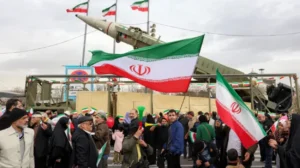
From Tehran’s perspective, the U.S. timeline may not align with its own strategic calculations. Iranian officials have publicly rejected elements of Washington’s diplomatic proposals, describing them as unrealistic or incompatible with national security priorities.
The government led by Ali Khamenei has signaled that Iran is prepared for a prolonged confrontation if necessary. Such statements indicate that Iranian leadership may view endurance and negotiation leverage as key components of its strategy.
Competing proposals and diplomatic channels
Negotiations involving intermediaries have reportedly produced competing frameworks for de-escalation. U.S. diplomats have promoted a multi-point plan intended to limit Iran’s missile and maritime activities, while Iranian officials have advanced proposals emphasizing sanctions relief and security guarantees.
The existence of parallel proposals underscores the complexity of diplomatic engagement during active conflict. Each side appears to be positioning its plan as the more realistic pathway toward stability.
Internal decision-making in Tehran
Another factor influencing the timeline is uncertainty about Iran’s internal decision-making process. U.S. officials have acknowledged that identifying authoritative negotiating partners remains a challenge, suggesting that political deliberations within Iran could delay any final agreement.
This dynamic illustrates how wartime diplomacy often depends as much on internal political alignment as on battlefield developments.
Allied reactions and concerns about prolonged engagement
European governments and G7 partners have responded cautiously to the two-to-four-week estimate. Many officials welcome the suggestion of a limited campaign but remain concerned about potential economic and security repercussions if the conflict extends beyond current projections.
Energy markets and global shipping networks have already reacted to the tension surrounding the Strait of Hormuz. These concerns explain why allied governments are pressing Washington for clearer indications of how the post-conflict phase might unfold.
Economic and maritime implications
The disruption of shipping routes and rising energy prices have amplified the stakes of the conflict for international partners. European policymakers have emphasized that even short-term military operations can have long-lasting economic effects.
As a result, discussions among allies increasingly focus on safeguarding maritime trade and stabilizing energy markets once active hostilities decline.
Post-conflict security expectations
Washington has also signaled that allies may play a role in future security arrangements in the Gulf. Proposals involving escort missions and monitoring mechanisms suggest that the conflict’s aftermath could involve a collaborative international presence.
Such expectations highlight how the timeline applies primarily to active combat operations rather than the broader security commitments likely to follow.
The tension between projections and uncertain outcomes
Rubio’s two-to-four-week projection captures the delicate balance between confidence and caution that often characterizes wartime communication. Public timelines serve to reassure audiences and anchor expectations, yet they rarely account for the unpredictable dynamics of conflict.
The coming weeks may therefore test whether the current campaign can achieve its objectives within the stated timeframe or whether evolving diplomatic and military conditions will reshape the narrative once again. For policymakers, analysts, and allies watching closely, the deeper significance of Rubio’s estimate lies not only in the calendar it proposes but in how it frames the broader question of what constitutes a definitive end to a war defined as limited yet strategically consequential.