Public opinion about the US–Iran conflict has increasingly moved away from battlefield developments and toward everyday economic signals. Gas prices and disapproval have become closely linked indicators shaping how voters interpret the administration’s strategy. Polling released in early 2026 shows a majority of Americans questioning whether the escalation against Iran has gone beyond what they consider necessary or sustainable.
Recent surveys from the Associated Press–NORC Center for Public Affairs Research indicate that about 59 percent of respondents believe U.S. military action against Iran has gone too far. Around the same period, Pew Research Center reported that roughly 61 percent of U.S. adults disapprove of President Donald Trump’s handling of the conflict. Analysts studying these numbers often emphasize that economic pressure is amplifying dissatisfaction rather than operating separately from it.
Polling trends highlight economic anxiety
Public opinion data collected through March 2026 show that concerns about household costs are rising alongside disapproval ratings tied to the conflict. Nearly half of respondents in the AP–NORC survey reported strong concern about affording gasoline in the coming months. The figure marked a noticeable increase compared with surveys conducted before tensions intensified in the Gulf region.
Researchers note that energy prices tend to function as an immediate signal for voters assessing foreign policy outcomes. When international conflict disrupts supply chains or markets, those changes often appear quickly in domestic fuel costs, making the geopolitical situation feel tangible for households.
Cost-of-living pressures shift political narratives
The political narrative surrounding the Iran campaign has gradually moved toward economic framing. Instead of focusing primarily on military objectives, discussions across media and policy circles increasingly emphasize the financial consequences felt by consumers. Higher transportation costs, supply disruptions, and inflation concerns are shaping how voters interpret strategic decisions made abroad.
Economic analysts argue that once voters associate a conflict with rising living costs, public debate often becomes less about tactical success and more about long-term domestic stability. That shift has placed additional scrutiny on the administration’s messaging about the purpose and expected duration of the campaign.
Partisan divisions deepen as the war evolves
Political polarization remains a defining feature of public attitudes toward the conflict. Gas prices and disapproval interact differently across partisan groups, revealing the complex way economic concerns intersect with party loyalty. Surveys show that Republicans are more likely to support the administration’s objectives, while Democrats and independents express significantly higher skepticism about the scale of military operations.
Despite this divide, the economic dimension has begun narrowing the gap in certain areas of opinion. Rising fuel costs and uncertainty about escalation appear to be influencing voters across the spectrum, even among those generally supportive of a strong national security posture.
Republican support with emerging caution
Among Republican respondents, polling suggests roughly half believe the level of military action has been about right. A smaller share argues the campaign should go further, while another segment views the escalation as excessive. Analysts interpret these results as evidence of conditional support rather than unconditional approval.
Several surveys conducted in early 2026 also show a majority of Republican voters expressing opposition to deploying large numbers of U.S. ground troops in Iran. The data indicate that while many Republicans accept targeted strikes or limited operations, they remain cautious about broader military commitments that could prolong the conflict.
Democratic and independent skepticism intensifies
Democratic voters overwhelmingly describe the current strategy as excessive, with about nine in ten respondents in some surveys indicating the campaign has gone too far. Among independents, roughly six in ten share that assessment, reflecting broader concerns about economic consequences and diplomatic fallout.
Political analysts note that independents often serve as a barometer for shifting national sentiment. Their growing skepticism toward the campaign suggests that economic pressures, including fuel prices, are influencing perceptions beyond traditional partisan boundaries.
From initial strikes to sustained criticism
The trajectory of public opinion becomes clearer when compared with the early days of the conflict. Gas prices and disapproval did not initially dominate the discussion when the first coordinated strikes on Iranian targets were reported. Early February 2026 polling from Reuters/Ipsos and other outlets showed approval for the decision to strike Iran ranging between roughly 27 percent and 50 percent, reflecting mixed but not overwhelmingly negative reactions.
Over the following weeks, the tone of public debate shifted. As military operations continued and energy markets reacted, polling results converged around majority disapproval levels, creating a perception that support had eroded rapidly compared with previous U.S. conflicts.
Early reactions and uncertain mandate
The relatively modest approval ratings at the outset suggested the administration entered the campaign without a strong domestic mandate. Analysts examining early polling data described the public mood as cautious rather than supportive, with many Americans waiting to see how the situation would evolve.
Historical comparisons highlight how unusual this pattern appears. Earlier conflicts such as the early stages of wars in Iraq and Afghanistan initially drew strong backing that gradually declined over time. In contrast, the Iran campaign faced skepticism much sooner.
Rapid consolidation of opposition
By March 2026, multiple polls indicated that a majority of Americans viewed the war as excessive or disapproved of its management. Experts studying political opinion trends say the rapid consolidation of opposition reflects both economic signals and the perception that the conflict might expand beyond limited objectives.
The timing of rising fuel costs contributed to the shift. As gasoline prices climbed, voters increasingly connected everyday financial strain with international developments tied to the conflict.
Gas prices as a political amplifier
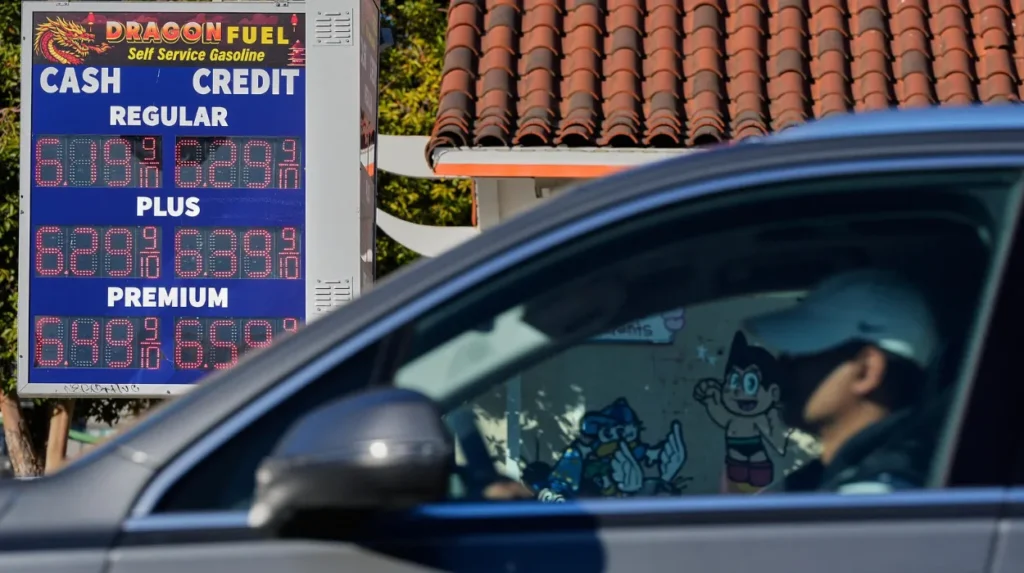
Energy prices have long served as a powerful influence on American political attitudes. Gas prices and disapproval often move together because voters directly experience the financial impact of global instability through their transportation and household budgets. The Iran conflict has amplified this dynamic, reinforcing the idea that foreign policy decisions can translate into immediate domestic consequences.
During the 2025 campaign period, economic messaging focused heavily on lowering living costs and stabilizing prices. That context has shaped how voters evaluate the administration’s current policy choices, particularly when fuel costs appear to move in the opposite direction of earlier promises.
Market volatility and voter perception
Energy market volatility following regional tensions has played a significant role in shaping public reaction. Analysts tracking global oil markets note that disruptions in shipping routes and concerns about supply security can quickly influence gasoline prices in the United States.
Even when price changes stem from complex global factors, voters often attribute them to the most visible political developments. In this case, the Iran campaign has become closely associated with those fluctuations, reinforcing perceptions that the conflict carries immediate economic costs.
Household budgets and political accountability
For many households, rising fuel expenses affect more than commuting costs. Higher gasoline prices influence delivery services, food transportation, and small business operations, creating a ripple effect across local economies. These pressures contribute to the broader sense that economic stability is closely tied to foreign policy decisions.
Political strategists across parties recognize that economic memory can shape electoral outcomes. When voters connect rising costs with a specific policy decision, that perception tends to persist even if prices stabilize later.
Policy implications and electoral risk
The intersection of gas prices and disapproval presents a complex challenge for policymakers. National security officials continue to frame the campaign as a necessary step to counter Iran’s missile capabilities and regional influence. Supporters argue that strategic deterrence requires sustained pressure despite short-term economic consequences.
At the same time, polling trends indicate that a majority of Americans remain unconvinced the operation justifies its domestic costs. Democratic lawmakers and several policy analysts have cited the polling data to argue that the administration faces increasing political risk if the conflict continues without clear progress or economic relief.
For Republican leaders, the challenge involves balancing traditional support for assertive foreign policy with the practical realities facing voters concerned about living costs. In swing states where elections often hinge on small margins, shifts in public sentiment tied to fuel prices could become a decisive factor.
The longer the campaign continues, the more likely public opinion will be shaped not only by developments in the Middle East but also by what Americans experience week after week at gas stations and grocery stores. The political trajectory of the conflict may ultimately depend on whether voters perceive the strategic goals as worth the financial strain, a question that continues to evolve as new polling and economic data emerge in 2026.