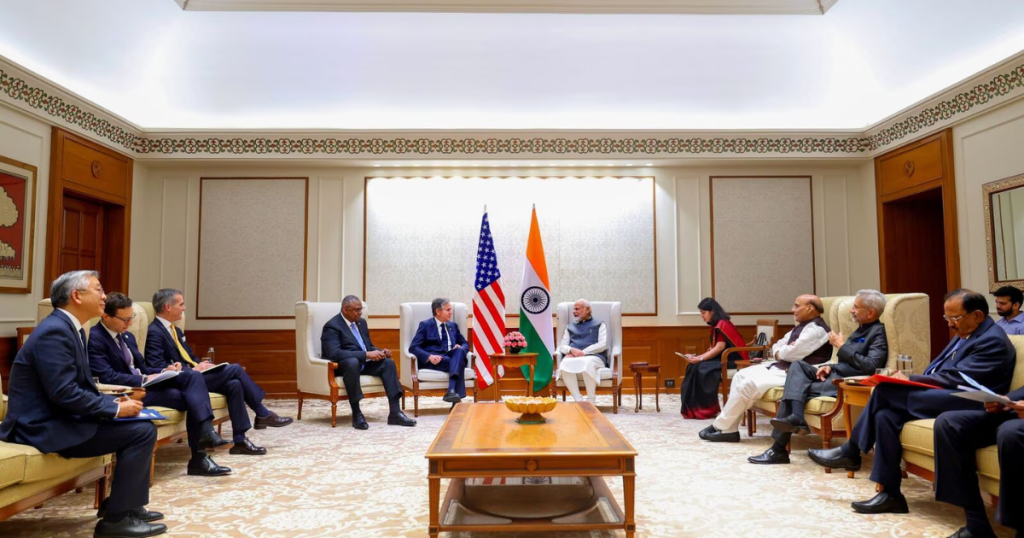
Establishing enduring peace and stability should be the US and India’s objectives when dealing with China. This necessitates waging peace with the same ferocity as war. The pursuit of peace necessitates constructive action on many fronts. The US and India have greatly advanced their partnership in every area since it opened in the early 1990s. The growth of trade and investment, interpersonal relationships, and technology collaboration has been exponential. The relationship between the US and India is now stronger and closer because of these kinds of engagement, which also makes it possible for the two countries to work together to create the kind of global peace and stability that includes inclusive wealth and well-being.
Shared concerns
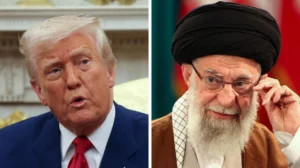
The foreign policy of the Trump administration has been widely criticized for having destroyed, or at least seriously damaged, American influence and prestige abroad, especially by alienating long-standing partners and friends. Aside from publicly demeaning NATO, the then-President of the United States, Donald Trump, openly questioned why the US kept up a security alliance with Japan, demanded that South Korea pay five times as much to house US troops, and supported the plan of then-President of the Philippines, Rodrigo Duterte, to end the US military’s visiting forces agreement. In addition, he chose conflicts over perceived unfair trade practices with Vietnam and India, two new strategic allies in the Indo-Pacific that may be essential to opposing China.
Strengthening bilateral relations
The Indo-Pacific alliances and relationships of the United States are perhaps the strongest and most profound in the country’s history. Given that they endured and, in the cases of India and Japan, even prospered in spite of Trump’s bullying and destructiveness, some of this is evidence of the extraordinary resilience of US alliances and partnerships. Indeed, these networks of friendship have been fostered and institutionalized by Washington for many years.
Credit also goes to the Biden administration, which has strengthened these crucial connections to strengthen deterrence against China and North Korea, the two primary dangers in the area, in addition to restoring them to their pre-Trump status quo after four years of turmoil. Beijing is also lending a big hand to the Biden team, since its unrelenting aggression is making its neighbors nervous. As any student of international relations would anticipate, this has persuaded an increasing number of nations in the area to abandon their hedging—the antiquated but increasingly untenable dogma of not wishing to pick sides—and adopt a balancing approach against China.
Economic cooperation
The United States will stand by India should it require its assistance. Rather, many within the diplomatic community in India and the US have disparaged. It may not have been appropriate to the occasion. The US-Indian relationship is characterized by a shared apprehension over the expansionist China under Xi Jinping, a China that expressly rejects an international system based on laws regarding state boundaries on land and at sea.
Of course, there are military aspects to the shared worry between the US and India over China. Pretending otherwise in the aim of appeasing China irritates nobody, least of all the Chinese. The efficacy of pursuing peace with China should be increased rather than decreased by the clear acknowledgment of this worry and the US-Indian alliance’s response to the danger. The kinds of border flare ups that have happened along the Line of Actual Control between China and India in 2020 and subsequently are fully manageable by India on its own. It is hoped that the issue with China along India’s northern border would eventually be resolved by Indian and Chinese diplomacy alone.
Maritime security
To interpret the Chinese threat as just drawing a border in a distant, hilly area would be incorrect. In its most severe version, Chinese claims would include the whole Indian state of Arunachal Pradesh as well as large areas of other Indian states, and would shift the boundary, at the very least, from the ridgetops of watersheds to the foot of the Himalayas. China proved in 1962 that it was more than capable of encroaching on significant portions of Indian land. A big power’s threat to the peace in one place can endanger the peace everywhere. Sadly, using force to counter these dangers is necessary. The US and Indian forces are fully aware of this. Therefore, the military-to-military sector has seen the most advancement in the US-India alliance over the previous three decades. More military drills are carried out between India and the US than any other nation.
Conclusion
In conclusion, India has been wary of entering into a relationship with the United States that might lead to the two nations being viewed as allies. This is partly a holdover from the Nehruvian non-alignment doctrine, which was subsequently termed strategic autonomy. These days, the reluctance to be labeled as an ally stems from a concern of being dragged into an armed war, as the one that would arise from Taiwan’s defense against a forced takeover of the island by the People’s Republic of China.