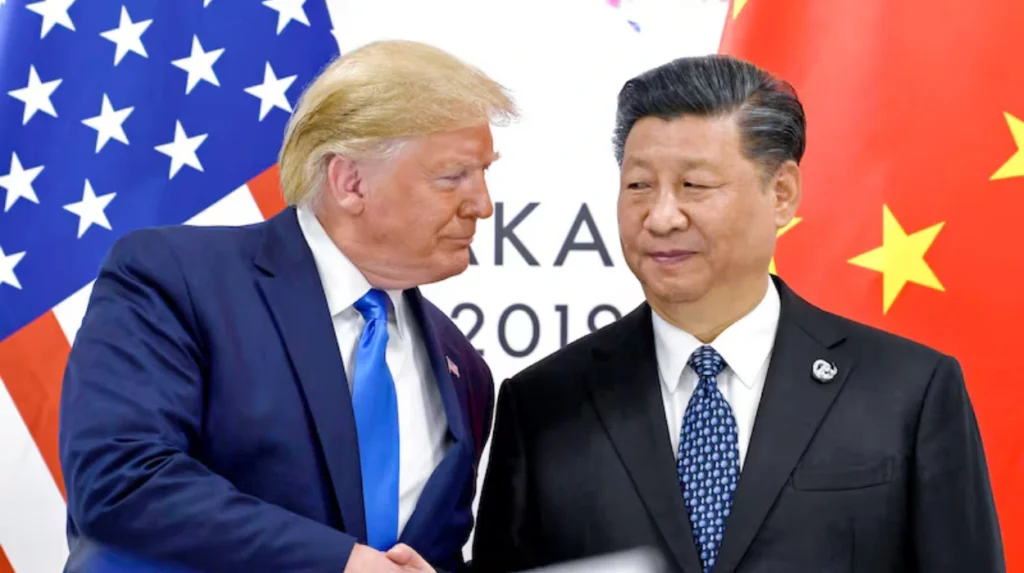
Another congressional study has further dividing the direction of American policy toward China in the future in the run up to a planned summit between Donald Trump and Xi Jinping in Beijing that will take place in late March 2026. Reporting by members of the Democratic party of the United States Senate Foreign Relations Committee labels the current strategy as a possible Strategic Misfire, claiming that recent trade and diplomatic policies have undermined the bargaining strength of Washington.
The report is called The Price of Retreat 2.0: Undermining America Economical Edge and Alliance Advantage and argues that a number of policy changes since 2025 have unwittingly enhanced the economic advantage of Beijing. Democratic legislators assert that alterations in tariffs, export regulations and an imbalanced alignment with the allies have made China enter negotiation with a rising international power.
Congressional authorship and political context
The report was championed by Jeanne Shaheen, the ranking member of the committee, which suggested that the unsynchronized policy messages have made the US initiatives against the Chinese industrialization complex. Shaheen cautioned that the United States households and exporters are paying economic prices as China keeps gaining market share worldwide.
Her comment comes at a politically inopportune time. Trump-Xi summit preparations have gone up a notch with increased geopolitical tensions and trade dynamics in the US-China relationship that have become the order of the day since early 2020.
Policy narrative ahead of high-stakes diplomacy
According to democratic analysts, the summit may offer a test on whether the economic pressure campaign by the administration has attained a significant leverage. Unless the tariffs and export controls can change the strategic behavior of Beijing, critics believe that Washington will have a weaker bargaining power in bilateral negotiations.
The advocates of the government justify that the instability of the negotiation style of Trump has been a historical tactic that has compelled his opponents to make concessions, which indicate that even the summit may yield unforeseen results.
Trade data and economic indicators behind the strategic misfire claim
One of the main pillars of the argument in the report is economic statistics. Figures published early 2026 indicate that China had a trade surplus of over 1.2 trillion in 2025, which was a record that analysts have seen as an indication of continued export competitiveness despite the fact that tariffs still exist.
The overall amount of American trade with China was decreasing in 2025, but Chinese output and export penetration of its manufacturing activities went on increasing all over the world. The authors of the report have indicated that this is an indication that tariffs have diverted supply chains instead of directly cutting the economic weight of China.
Tariffs and domestic economic pressures
The tariffs used in the second administration of Trump were meant to support the domestic industries and to promote the reshoring of operations. Democratic legislators, however, claim that the measures have caused higher production expenses to the American companies relying on imported parts.
The suppliers in the automotive and electronics manufacturing chains reported hiking prices associated with tariff-adjusted inputs. These economic pressures have been transferred to the consumers and they have been concerned with inflationary impacts in the United States.
Agricultural exports and retaliatory measures
Retaliatory trade policies have also affected agriculture. Chinese tariffs on US farm products have made it difficult to access the export markets by the US producers especially the soybean and grain exporters.
The farm groups have continuously warned that market volatility poses an uncertainty in long-term planning. Government subsidies have partially taken the place of losses but the key issue on sustainable market access has not yet been answered.
Technology controls and semiconductor policy shifts
The other factor that has been mentioned in the Strategic Misfire report concerns the changes to export restrictions of advanced technology. Towards the end of 2025, the US official government relaxed some of their licensing regulations related to the export of semiconductors to Chinese manufacturers.
The democratic members of parliament claim that the reforms threaten to destroy the efforts of Washington to maintain a technological lead in high-risk areas like artificial intelligence and advanced computing.
Semiconductor exports and strategic competition
Geopolitical competition has shifted its focus to semiconductor supply chains. The American government has tried to limit the distribution of high-performance chips, which are employed in military and surveillance technologies.
The early 2026 export statistics showed that shipment of semiconductors to Chinese companies had increased significantly. This is fraught with critics warning that this type of development would lead to the faster rise of China in terms of advanced computing systems and artificial intelligence research.
Corporate and industry responses
The technology firms in the United States have pushed towards balanced export policy that does not jeopardize national security but at the same time ensures that the country has access to the global market. Representatives of the industry state that the excessive limitation may promote the acquisition of the market by foreigners.
The subsequent policy dilemma is an indication of the much larger issue of control over dual use technologies equal usefulness in civilian and military applications.
Alliance diplomacy and shifting global partnerships
The Strategic Misfire report also highlights the importance of alliances in the formation of competition with China. Democrat legislators claim that the relations between Washington and some of its old allies have undermined the unity in combating the economic influence of Beijing.
Cooperation with European and Asian allies has been complicated due to diplomatic differences on trade tariffs and defense spending. The report advances that these disputes could have unintentionally promoted partners to diversify their economic association.
European policy recalibration
A number of governments in Europe have been extending trade agreements with China and at the same time have been engaged in de-risking strategies to avoid overdependence. France and Germany have stressed the need to have a balanced economic involvement with the two world powers.
In 2025, European Union policy deliberations were largely about supply-chain resilience, as the issue of geopolitical instigations to vital sectors became a matter of concern.
Asian strategic balancing
Diversified economic approaches have also been experienced by Asian partners such as Japan and South Korea. The intra-Asian supply chains have been developed by regional trade initiatives and have decreased dependence on the US and Chinese markets.
The report views such developments as indicative of the fact that cohesion within alliances might be fading away in the confrontation of economic uncertainty.
Republican defense of administration strategy
The Strategic Misfire label has been decried by Republican politicians and administration figures. Proponents believe that economic pressure and tariffs have already served to deliver noticeable outcomes such as the boost in domestic manufacturing investments.
The officials of the administration provide examples of job creation in the manufacturing industries of the US and the elimination of fentanyl trafficking as achievements during negotiations with Beijing.
Bilateral diplomacy and security cooperation
Authorities cite the recent collaboration between Washington and Beijing in narcotics enforcement as an indication that direct leader-level diplomacy could yield real results. Higher confiscations of fentanyl shipments throughout 2025 were introduced as an indication that selective engagement can provide a benefit to security.
The White House has also suggested that the upcoming summit could address technology safeguards, market access, and trade imbalances simultaneously.
Political divisions within Washington
Despite public unity among many Republican leaders, some policy analysts within conservative circles have expressed concern about entering negotiations without stronger alliance coordination. They argue that broader coalition building could amplify American leverage in economic disputes with China.
These internal debates mirror longstanding disagreements over whether bilateral or multilateral strategies offer the most effective path for managing great-power competition.
Global reactions and the evolving geopolitical landscape
International observers have followed the debate closely as the Trump-Xi summit approaches. Chinese officials have signaled both caution and confidence in public statements, emphasizing the resilience of their country’s economic growth.
State media commentary in China has portrayed recent trade data as evidence that Beijing can withstand prolonged economic pressure. At the same time, analysts note that Chinese policymakers remain attentive to signals from Washington regarding future tariffs and technology restrictions.
Competing economic visions
The rivalry between the United States and China increasingly centers on competing economic models. Beijing has invested heavily in industrial policy initiatives supporting electric vehicles, renewable energy technologies, and digital infrastructure.
Washington, meanwhile, has focused on supply-chain diversification and domestic manufacturing incentives. These parallel strategies reflect broader efforts by both countries to secure technological leadership in emerging industries.
Strategic questions surrounding the upcoming summit
Diplomatic expectations surrounding the Beijing summit remain uncertain. Observers suggest that both leaders may seek limited agreements addressing specific issues rather than a comprehensive reset of bilateral relations.
Trade balances, technology controls, and geopolitical competition in the Indo-Pacific are likely to dominate discussions. Yet the outcome may hinge less on immediate policy changes and more on how each side interprets the shifting balance of economic influence.
As the debate surrounding the Strategic Misfire report unfolds in Washington, the approaching Trump–Xi meeting illustrates how domestic political arguments and international power dynamics increasingly intersect. Whether the summit produces tangible policy adjustments or merely reinforces existing strategic rivalries will shape perceptions of American leadership in a rapidly evolving global economic order.