White genocide has transformed into an excluded conversation in South African politics to become a common theme in the political discourse of the United States. The term has been used in speeches, media commentary, and policy discourse in Washington over the last few years turning a disputed local assertion into a political narrative all over the world.
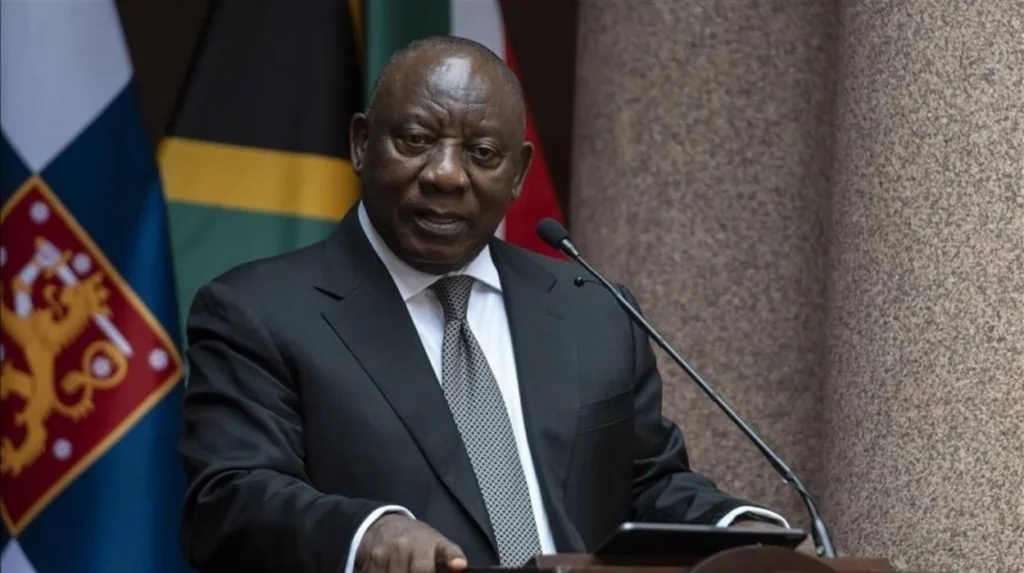
The problem was again in the limelight in early 2026 when the United States and South Africa experienced a diplomatic conflict. The furor succeeded in comments made by the new American ambassador to South Africa, Leo Brent Bozell III that reiterated the concerns by the US president Donald Trump who complained of alleged persecution of white South Africans. The ambassador was called by South African officials following remarks about government policies on the land reform and racial equality programs.
The diplomatic exchange demonstrated the current operation of the white genocide narrative way out of context. Although South African officials claimed that the story does not reflect the realities in the country, the US political figures are actively constructing the problem as a subset of the wider concerns of race, identity, and minority rights.
How crime and race intersect in South Africa’s violence crisis?
In South Africa, violence rates are still one of the highest in the world, which makes it a good place where political explanations of crime trends can be developed. However statistical data gives a more nuanced version of the mythical narrative as told simplistically by the international debates.
National crime patterns across communities
Tens of thousands of murders are registered annually in South Africa most of which are focused in economically marginalized regions. The majority of the victims are Black South Africans in townships or informal settlements where the police resources are scarce.
Those who study homicide statistics repeatedly discover that most victims of violent crimes are a part of disadvantaged communities that experience structural poverty and lack of employment. The end results of these circumstances include elevated social stress, gang activity and local criminal networks.
In this greater framework, allegations of systematic extermination of white citizens are not supported empirically. Independent research on criminology and law enforcement has constantly pointed out that violent crime in South Africa is not racially oriented, but pervasive.
Farm attacks and rural insecurity
Farm attacks are also one of the most emotionally charged areas of the white genocide debate. Rural crime is marked by extreme violence and victims become the farmers, the farm workers as well as the community neighbors.
Such incidences create a great publicity response as farms are secluded and often there is long-lasting violence during an attack. Most farmers believe that the attacks are politically inclined or are based on racial grounds.
Nevertheless, according to the crime experts, the percentage of farm murders in the national homicide is small. Although this has been disproportionately among the communities who depended on agriculture, no proof exists of an organized movement to eliminate white landowners. Rather, the perpetrator is usually associated with robbery, economic or opportunistic crime by investigators.
Legal and academic responses to genocide claims
The white genocide narrative has been discussed in courts and other academic settings in South Africa. The findings of their work tend to contradict the statement and admit the severity of rural crime.
Judicial interpretations of genocide allegations
In the cases relating to political speech and security issues, South African courts have dealt with the difficulty indirectly. The judges who hear cases on alleged racial persecution have often found the evidence insufficient to prove that there is a systematic extermination campaign.
Courts have indicated that there are constitutional aspects that the government should uphold to protect every citizen irrespective of race. Courts further document that the constitution in South Africa expressly outlines against racial discrimination and this establishes a legal framework that was quite different to those of apartheid.
The diplomatic debates have made these judicial interpretations to be the main points of reference in cases where foreign officials criticize the policies of South Africa.
Research and media investigations
In 2025, the white genocide narrative was investigated by academic institutions and investigation journalists alike. A number of studies examined viral photos and social media that were utilized to depict alleged atrocities.
Researchers found that there were wrongly labelled images that were shared widely or out of unrelated events. Photographs that were used as evidence of violence in South Africa in some instances showed what had happened in different countries.
These findings supported the view that digital misinformation is a contributor to the proliferation of the narrative. According to scholars, when emotionally resonant images are shared on the internet, they may influence any political discussions even after some corrections have been made.
Why does the narrative resonate in US political discourse?
The emergence of white genocide narrative in American politics is more of domestic political processes than what is going on in South Africa.
Electoral politics and cultural symbolism
South Africa is a symbolic representation of debates over demographic change and race relations to some political figures in the US. The mention of white South African farmers enables the politicians to view global concerns in the light of American cultural politics.
Proponents of this framing usually portray Afrikaners as a minority who have been endangered by the policies of the government like land redistribution. The story supports a larger argument of being discriminated against as a white community.
Throughout the election seasons, these themes are very popular amongst some groups of voters who fear cultural or demographic changes. Consequently, South African developments are sometimes brought to the spotlight in political campaigning although the policy has little direct domestic policy relevance to US interests.
Media ecosystems and online amplification
Modern media ecosystems accelerate the spread of politically useful narratives. Social media platforms and partisan media outlets amplify emotionally charged stories about farm attacks or land reform disputes.
These platforms often present individual incidents as evidence of broader patterns. Over time, repeated circulation can transform isolated events into perceived confirmation of the white genocide claim.
Communication scholars note that this dynamic reflects broader global trends in which foreign conflicts become symbols within domestic political debates.
South Africa’s deeper structural challenges
Focusing narrowly on the white genocide narrative risks obscuring the deeper structural problems driving violence and instability in South Africa.
Inequality and economic stagnation
South Africa remains one of the most unequal societies in the world. Decades after the end of apartheid, economic disparities persist between communities and regions.
Unemployment rates remain extremely high, particularly among young people. Economic stagnation and limited job opportunities contribute to crime and social frustration across many communities.
The persistence of inequality also fuels political pressure for redistributive policies such as land reform and economic empowerment programs.
Weak institutional capacity
Institutional challenges compound the country’s social problems. Police forces face resource shortages, while court systems struggle with case backlogs and slow prosecution processes.
Corruption scandals over the past decade have further weakened public trust in state institutions. Analysts argue that strengthening governance and public administration is essential for addressing crime effectively.
These governance issues affect all communities, not only rural farming populations. Residents of urban townships frequently experience similar frustrations with policing and public services.
Land reform debates and international misunderstanding
Land redistribution remains one of the most sensitive political topics in South Africa, reflecting unresolved tensions from the apartheid era.
Historical roots of the land question
During apartheid, vast areas of agricultural land were controlled by a small minority of white landowners. Democratic governments since 1994 have attempted to redistribute land to historically dispossessed communities.
Progress has been slower than many citizens expected. As a result, land reform remains politically contentious within South Africa’s domestic debates.
For farmers and agricultural businesses, uncertainty around property rights creates economic anxiety. For many Black South Africans, delays in redistribution symbolize unfinished justice.
External interpretations of reform policies
Land reform is occasionally used by international commentators as evidence to support the white genocide narrative. But South African policymakers interpret such reforms as efforts to correct past wrongs, yet food security and economic stability are preserved.
The authorities are clear that redistribution initiatives should exist within constitutional contexts. The reforms are still influenced by courts and processes in parliament.
Such local deliberations can be confused with misinterpretations in foreign countries where foreign criticism can solidify the views of political groups.
Diplomatic implications for US–South Africa relations
White genocide rhetoric is a controversial issue with wider implications to bilateral relations in Washington and Pretoria.
South Africa is at a strategic place in international relations being part of BRICS grouping and the leader in the African Union. The country has vast economic and security relations with the United States in trade agreements and development programs.
In this process, cooperation in the public health matters, energy transition, and regional security is more complex when political discourses are more prevalent in diplomatic discussions. Both sides should overcome the challenge of finding balance between domestic political interests and long-term strategic interests.
Observers observe that diplomatic wrangles tend to be a manifestation of overall geopolitical rivalry with the new powers aiming to have influence in Africa.
The South African situation is highly multi-layered and it hardly fits in the simplistic categories that have dominated the global political discourse. Violence, inequality, and institutional problems continue to be burning issues among millions of citizens. A continuation of the white genocide discourse in the international system or a shift to more substantive activities in the structural inquiry of the country can be the defining factor in how the international community views and acts in response to one of the most consequential democracies in Africa.