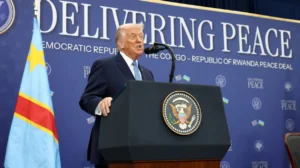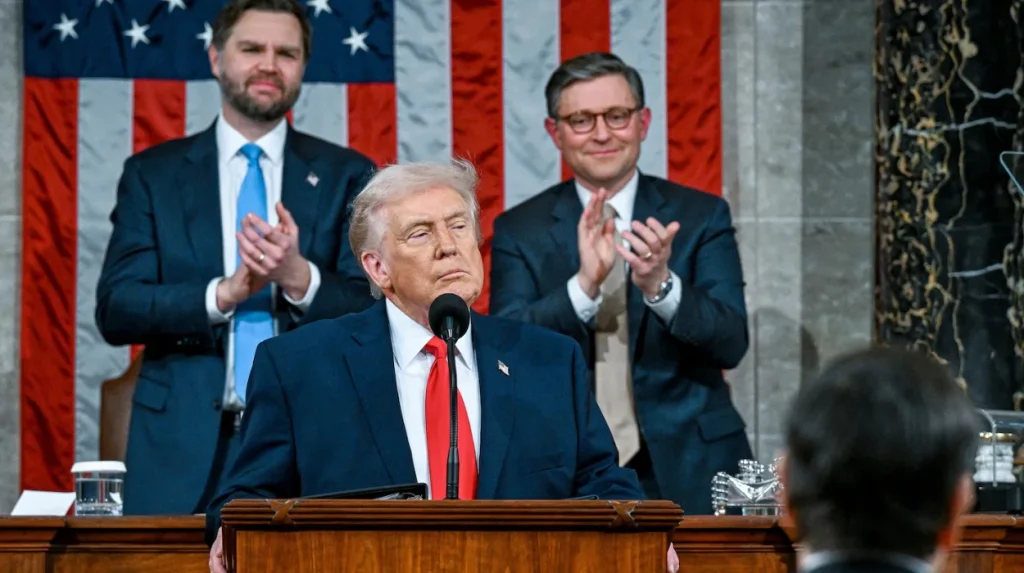
The Donroe Doctrine became a part of the foreign policy vocabulary when President Donald Trump presented a hemispheric policy to establish U.S. primacy in Latin America and the Caribbean. The initiative is positioned as a contemporary heir to the Monroe Doctrine of establishing security dominance over what Trump has repeatedly referred to as “America’s Backyard”.
The Donroe Doctrine is a wider spectrum of threat as compared to its nineteenth century counterpart that mostly cautioned European powers about getting into colonial affairs. It points at transnational drug cartels, irregular migration networks and hostile regimes as disruptive powers that need direct intervention by the U.S. The administration officials have described the doctrine as a security architecture, and a strategy of economic reordering, which would position the regional governments in line with the priority of enforcement by Washington.
The revelation came after months of increased pressure on Venezuela and extended military activities in the Caribbean. By early 2026, American authorities demonstrated the arrest of Venezuelan President Nicolas Maduro as the demonstration of the functioning ability of the doctrine, indicating the readiness to act without prior consultation in case of problems in the region that can be considered a threat to the U.S. interests.
Historical Echoes and Contemporary Adaptation
The mention of Monroe Doctrine has its symbolic meaning. The initial declaration of 1823 had placed the United States in the role of being a protector against European intervention without the need to be occupied by military occupation. The language contained in the Donroe Doctrine is tailored to the modern security realities, with a focus on narcotics trafficking, border security, and geopolitical competition.
From Anti-Colonial Shield to Security Enforcement Tool
The Monroe Doctrine served as a diplomatic threat with the limited naval force. In comparison, the Donroe Doctrine incorporates hi-tech intelligence systems, economic sanctions and light footprint forces. It is an interpretation of hemispheric influence through the prism of security first which is defined by domestic political concerns of migration and fentanyl trafficking.
The officials in administration believe that non-state actors have become as dangerous as historic colonial ambitions. Through speeches in 2025, Trump claimed that cartel networks were parallel powers that had compromised the sovereignty of the states in Mexico and Central America. This rebranding changes the thesis of the doctrine towards internal destabilizers.
The 2025 Prelude
In 2025, Washington stepped up sanctions and asset freeze against Venezuelan organizations. An increase in maritime patrols in the Caribbean was explained by the counter-narcotics efforts, but served as strategic signaling. Analysts noted that such measures established functioning conditions, which were later referred to as the basis of the Donroe Doctrine.
The closer diplomatic relations with Colombia and Brazil intensified at this time, with governments in the region sharing security cooperation structures. These initial alliances indicated that the doctrine would not be founded on multilateral consensus but individual alliances.
Core Tenets and Implementation Mechanisms
The Donroe Doctrine is based on three foundations, which are coercive deterrence, economic realignment, and conditional partnership. It is more focused on fast reaction to the perceived threats, shift of economic processes of the region to the American companies, and the compulsory measures against those governments that appear to be not cooperative enough.
Its most visible implementation episode became the arrest of Nicolas Maduro. According to the U.S. officials the operation was a targeted move based on old-time indictments involving the illegal trade in narcotics. The fact that Maduro was transferred to be charged in New York highlighted the adoption of military precision and judicial power by the doctrine.
Economic Reorientation in Venezuela
After ousting Maduro, the U.S. authorities indicated that it would support the reorganization of the Venezuelan energy industry. The US energy companies have been reported to consider the option of new oil infrastructure investment, with economic stabilization as a channel towards a normalization of politics.
The opponents of this intervention claim that these efforts will foster the view of intervention as resource-based intervention in Latin America. Advocates retaliate that economic integration would denude financial networks to illicitly finance the network. The magnitude of the committed investment has further raised the debate on whether the economic aspect of the doctrine embodies strategic need or geopolitical business demands.
Security Partnerships and Conditional Aid
Bilateral security arrangements are also made in the doctrine. When nations collaborate in counter-cartel activities, they can have wider sharing of intelligence and assistance in its development. Such individuals seen to be obstructive might have aid cut or sanctions imposed against them.
Temporary aid suspensions to some of these regional governments in 2025 were seen as the first indicators of this conditional method. Donroe Doctrine codifies that stance, and compliance is a condition to a continuing alliance.
Regional and International Reactions
The responses in Latin America have been indifferent. Colombian leaders have also embraced enhanced anti-cartel coordination on grounds that they have common security goals. The Brazilian leadership has been more cautious highlighting issues of sovereignty despite the fact that it has been cooperating with counter-narcotics intelligence.
The congressional reactions in the United States are partisan. Republican legislators have coined the doctrine as long-awaited realism in addressing the issue of regional instability. The mechanism of oversight has been challenged by democratic leadership especially on the scope of cross-border functions of the executive.
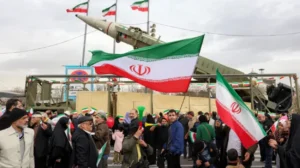
European allies abroad have avoided criticism directed at it, and instead worked with other theaters on transatlantic coordination. Russian and Iranian leaders have described the doctrine as unilateral imperialism, which has been associated with wider arguments concerning the American influence around the world.
Strategic Implications for Hemispheric Power
The Donroe Doctrine can be considered as an effort to unify power under changing alignment of the world. China has over the last ten years been able to increase its infrastructure investments across Latin America within its Belt and Roads framework. As a way of offsetting that presence, Washington has tied security enforcement to economic incentives.
This doctrine has to rely on permanent credibility. In case such operations as the arrest of Maduro are seen as effective deterrents, the regional actors might rebalance their strategic orientations. When they are regarded as short-term interventions that are not based on long-term planning, the degree of skepticism might increase.
Migration and Domestic Political Calculus
The doctrine still resonates with migration domestically. The administration ties hemispheric enforcement to border security, which makes foreign policy consistent with domestic political interests. In late 2025, officials pointed to reduced irregular crossings as a sign that the upstream pressure can have the downstream effect.
But the drivers of migration are complex and they consist of economic instability and displacement caused by climate. These structural factors might not be resolved just through security measures, which should also cast doubt on the ability of the doctrine to have a long-lasting effect.
Balancing Deterrence and Diplomacy
The doctrine of enforcement is likely to reduce the flexibility of diplomacy. The governments of the regions can collaborate on security and oppose larger adherence. The strategic challenge will depend on whether the economic integration and political dialogue will come with the tools of coercion in the long run.
The administration claims that a bold step discourages enemies and brings back sanity to the U.S expectations. Critics warn that there is a risk of perceived unilateralism, which would promote regional hedging to other partners.
The Path Ahead for U.S. Hemispheric Influence
Once the Donroe Doctrine reaches its working stage, the direction that it takes will be guided not by rhetoric but by action. The ability to continue enforcing the law, sound processes of justice and open economic relations will either consolidate or disintegrate U.S. influence.
Hemispheric politics are rarely static. Alliances shift, domestic governments change, and external actors adapt. The doctrine signals an assertive recalibration of U.S. posture, yet its durability will depend on whether power projection can coexist with mutual legitimacy. In a region marked by both interdependence and historical sensitivity to intervention, the next phase may reveal whether revived hegemony can translate into durable stability or whether it will generate new forms of strategic friction just beyond Washington’s immediate horizon.