The phrase Fading Influence? The mood of Americans Sound Alarm on Weakening US Clout has gradually escalated up to 2025 and early 2026. According to survey information of the key research organizations, there is a long-term belief that the United States is losing its position diplomatically, economically, and militarily, despite being the epicentre of international security systems.
In early 2025, a poll conducted by Gallup indicated that satisfaction with the American place in the world was at all-time lows. It was found that only one-third of people were sure about the international position of the country. Although such numbers change according to the geopolitical developments, the fact that moderate ratings are maintained indicates structural discontent and not temporary discontent.
This perception was supported by data of the Chicago Council on Global Affairs. Only a small majority of Americans indicated that they thought the US influence in the world is weakening. It is worth noting that this feeling exists alongside a solid inclination towards maintaining relationships and active involvement in international life, which makes the policy environment rather complex to the decision-makers.
Polling Trends and the Perception Gap
The sense of declining influence is not always consistent with the objective measures of power. There is the largest defense budget in the world and a pivotal position in the financial institutions of the United States. But the public confidence does not always depend on the capacity but on the assumed results.
Satisfaction Levels and Global Respect
According to surveys taken by the Pew Research Center at the end of 2025, a significant majority of Americans believe that the global respect of the United States is vital. But more than half of them thought that the country was now able to command such respect. And this incongruity between hope and perception is the source of the plot of declining power.
The views are also influenced by economic headwinds. The inflation pressures and the worry about the vulnerability of the supply chains have erased the line between domestic stability and international leadership. In the case of Americans who feel weak at home, the belief in exerting influence extends to the outside.
The Partisan Divide
The perception gap is enhanced by partisan polarization. The republicans and the democrats differ not only on the reasons of perceived downfall but also on the extent of the same. In mid-2025, according to Ipsos data, Republicans were more likely to say that the US position had been undermined by policy missteps, whereas Democrats feared reputational harm as a result of instability in the world and democratic reversal in countries abroad.
This contradiction makes foreign policy consensus between the two parties a difficult undertaking. Although they both publicly support deterrence towards those they are fighting, they are different on how the resources should be expended and management of alliances. The resulting arguments enhance the public perceptions of inconsistency, further enhancing the perceptions of reduced influence.
Global Flashpoints Reinforcing Doubt
These perceptions have been a constant in major international crises in 2025. The continued assistance to Ukraine, the growing tension in the Middle East, and renewal of tension in the Asia-Pacific leadership have all added to the strategic exhaustion.
Ukraine and European Security
The persistence to provide military and financial support to Ukraine has reaffirmed the US leadership in NATO. Nonetheless, the opinion of the population is quite sophisticated: very intense approval of the framework of alliances along with increasing doubts about permanent commitments.
The persistence of the conflict has made some Americans believe that the US influence is not enough to create a resolution. The lack of a definite end state encourages images of low leverage even in cases where support is still present.
Middle East Volatility
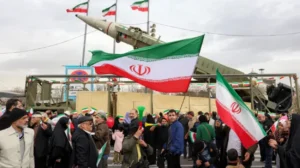
The growing regional tensions, especially between Iran-sponsored forces and the security stance of Israel have also challenged the beliefs about American influence. The United States remains in the middle of the process of trying to intervene and discourage, yet, with the frequent breakdowns, counter-narratives of instability have become inaccessible to US influence.
The simplicity of these crises makes uncomplicated measures of power difficult. The Diplomatic engagement and containment policy are usually silent in their operation, but the visible effect is usually met by the opinion of the masses more than the gradual gains.
Asia-Pacific Pressures
In 2025, new questions were raised about US credibility in deterrence after heightened activity by the Taiwanese Navy and rhetoric. Alliances appear to enjoy strong political backing in Asia and worry over overstretch is apparent.
Americans seem to separate commitment and capacity. On the one hand, they are in support of protecting allies, and on the other hand, they are in doubt whether the state of affairs regarding numerous flashpoints at once makes the USA ineffective.
Alliances as Both Asset and Test
Alliances are rated as favorable even though Americans have perceived a declining influence. According to the Chicago Council surveys, there are high majorities in favor of NATO and Asian security alliances. This implies that alliances have been perceived to be force multipliers by people instead of a liability.
Nevertheless, the management of alliances has become an influence on its own. Arguments of burden-sharing and trade issues may influence the attitudes towards respect and reciprocity. In cases where the alliance cohesion is showing to be stretched one might expect that people will lose confidence in the US leadership despite the fact that there are institutional ties that are still in place.
The irony is clear: Americans cherish alliances as the tools of power, but they see apparent conflicts as the signs of declining power. This stress emphasizes the symbolic aspect of world power.
Domestic Context and Strategic Confidence
The worry among the people in the US over the diminishing US influence cannot exist in isolation of political and economic issues in the country. The foreign policy perceptions are being more and more tied to immigration policy, fiscal deficits and
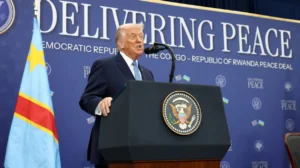
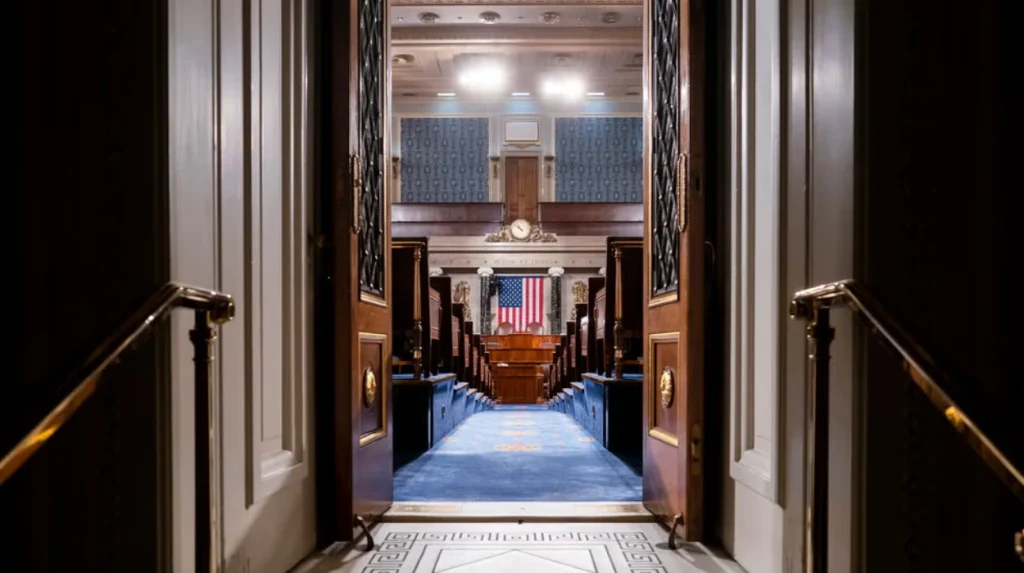
The 2026 address by Donald Trump is anticipated as a pivotal moment to address these anxieties. Preview commentary from major broadcasters suggests that reassurance on global leadership will be central. Yet rhetoric alone may not recalibrate perceptions shaped by years of cumulative strain.
Historical patterns indicate that public assessments of influence often follow visible turning points, whether diplomatic breakthroughs or decisive deterrent actions. Absent such markers, incremental gains may go underappreciated.
Measuring Influence in a Multipolar Era
The discussion of waning power is also indicative of a more general change in structures to multipolarity. The economy, regional aggression by middle power, and technological rivalry in China have shifted the balance of power in different areas.
In this kind of setting, power is not so absolute but rather relational. The US could be left with unsurpassed military strength as well as encountering stiffer challengers in the world of trade, technology, as well as in regional relationships. This recalibration may not be completely explained by the pressures in the eyes of the people and decades of post-Cold War primacy.
In addition, information flows mediate the influence in the digital era. An impression of a downward trend can go viral across social media and magnify short-term failures to tales of structural undermining. Policymakers have to struggle with strategic realities, however, as well as perception management.
Strategic Implications Moving Forward
Do you think the term Fading Influence? The mood of the Americans Sound Alarm on Weakening US Clout reflects the current mood, and the policy problem is to align the perception with the quantifiable ability. The devoted involvement of alliances, calculated deterrence, and high-profile diplomatic success could eventually regain trust.
Yet the durability of public concern suggests deeper questions about the nature of leadership in an interconnected world. As 2026 unfolds amid persistent geopolitical volatility, the relationship between domestic resilience and international credibility will likely shape how Americans interpret each new development. Whether emerging crises reinforce the narrative of decline or offer opportunities to demonstrate adaptive strength remains an open and consequential question.