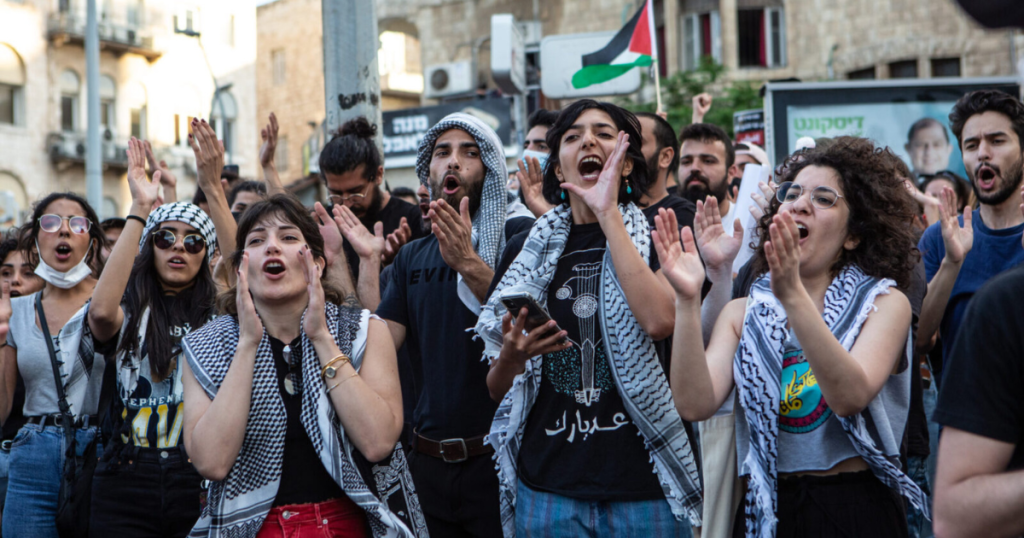
A motion to remove Ofer Cassif, a Jewish politician from the Palestinian-Arab joint list Hadash-Ta’al, from the Israeli parliament will be put to a vote. This is in response to Cassif’s statements that Israel is committing war crimes in the Gaza conflict and endorsing South Africa’s complaint against Israel before the International Court of Justice (ICJ). Cassif’s expulsion from the Knesset would be the first instance of the national assembly using the Suspension Law, and it would also mean that the legal space available to non-Zionist politicians in Israeli politics will be severely limited.
Implications for Palestinian Representation
Enacted in 2016, the Suspension Law gives the Knesset the power to remove a member through a special, quasi-adjudicatory procedure. A group of seventy or more members of the Knesset (MKs) may, in accordance with the legislation, propose a resolution to remove a fellow MK from the Knesset if they consider the colleague’s acts to be “incitement to racism” or “support for an armed struggle against the State of Israel.”
The Knesset House Committee must first vote on the resolution. It next goes to a vote on the Knesset floor, where a comparable three-quarters majority is needed, if it succeeds with a three-quarters majority. The ousted MK has two weeks to file an appeal with the Supreme Court if the expulsion is accepted. As the spokesman of the Israeli Communist Party within Hadash-Ta’al, MK Cassif has been a passionate voice of the post-Zionist left in Israel. The Israeli right wing, along with many centrists, have long opposed Cassif. He has been embroiled in a number of scandals since his election in 2019, including those including his designation of the Israeli occupation as “terror” and his nickname for Israeli settlements, “monsters.” Cassif was among the first MKs to demand a cease-fire and has also been critical of Israel’s conduct in the Gaza War, claiming war crimes are committed by the Israeli military.
Erosion of Democratic Principles
Knesset on June 25, 2023, in Jerusalem. (Flash90/Yonatan Sindel)
A letter signed by 85 Knesset members demands that Hadash-Ta’al MK Ofer Cassif be impeached for publicly endorsing a South African resolution that brought an accusation of genocide against Israel before the International Court of Justice in The Hague. Oded Forer, a Yisrael Beytenu MK, launched a petition to remove the extreme-leftist legislator from the Knesset on the grounds that it was “treasonous” for him to publicly support Pretoria’s vote against Israel. It has been endorsed by lawmakers from both the coalition and the opposition, including a number from Yesh Atid, the opposition leader’s party, and Benny Gantz’s National Unity party, the war cabinet minister.
International Scrutiny
The sole Jewish member of the Hadash-Ta’al party, which is led by Arabs, Cassif signed a petition last week endorsing South Africa’s case and has accused Israeli officials in public of pushing crimes against humanity against the Palestinian people. As per the Basic Law, a colleague who has voiced support for “an armed struggle” against the State of Israel may be expelled from the Knesset by 90 members, or 75 percent of the Knesset, by a vote. The topic is sent to the Knesset House Committee upon gathering 70 signatures, and if approved there, it proceeds for a vote in the plenum. On Wednesday, the request to start the impeachment process against Cassif was given to Knesset Speaker Amir Ohana. After reviewing it, he will send it to MK Ofir Katz, the chairman of the Knesset House Committee, who will then need to arrange a hearing on the matter within ten to twenty-one days after receiving it. During the committee hearing, which will also be attended by representatives of Attorney-General Gali Baharav-Miara and Knesset legal adviser Sagit Afik, who will offer her legal opinion on the case, Cassif may elect to be represented by counsel.
Conclusion
In conclusion, The Suspension Law is a component of the political right’s long-term plan to deprive Israeli citizens of their representation unless they give up their dreams of becoming a national Palestinian people. The right wing, led by Netanyahu, has supported several policies aimed at restricting Palestinian parliamentary participation throughout the past 20 years. Only after the Supreme Court intervened on behalf of multiple Arab and non-Zionist parties and politicians, such as Ofer Cassif, who had been denied the right to run for office by the Central Elections Committee an organization largely made up of representatives of the political parties with seats in the Knesset did some Arab parties take part in elections during the previous 20 years.