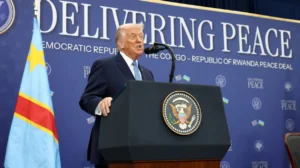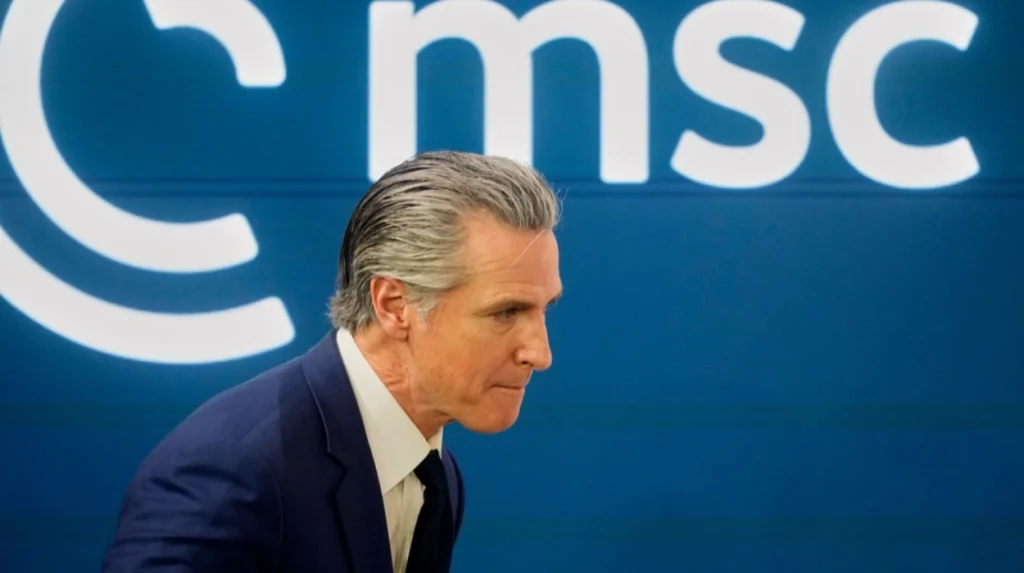
However, California Governor Gavin Newsom aimed to calm European leaders during the Munich Security Conference by stating that the unconventional approach of US President Donald Trump to international relations is only temporary and should not be used to gauge the future of relations with Europe. Newsom stated that political cycles come and go and that Europeans should not lose faith in the US.
“If there’s nothing else I can communicate today,”
he said,
“Donald Trump is temporary. He’ll be gone in three years.”
Rubio Attempts to Calm Transatlantic Anxiety
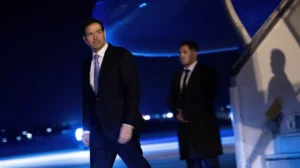
US Secretary of State Marco Rubio was the center of attention at the conference, as the Europeans were waiting for a clue on the US position regarding its traditional allies. Rubio’s speech, which was moderate and conciliatory in tone, was interpreted as a bid to ease tensions in the strained relationship.
Rubio’s speech was welcoming and called for cooperation, noting that the US and Europe “belong together,” a marked contrast to the confrontational approach taken by US Vice President JD Vance in his address to the conference the previous year, in which he accused the Europeans of pursuing a policy of “civilizational suicide.”
American Lawmakers Offer Reassurance to Allies
Newsom was among a number of American politicians in Munich who wanted to reassure their counterparts in Europe. Most of the politicians wanted to assure the Europeans that despite the political storms in the country, the US is still committed to the alliance.
US Democratic Senator Jeanne Shaheen said the delegation’s visit was meant to show the significance of the alliance, while US Republican Senator Thom Tillis wanted the Europeans not to be affected by the political rhetoric in the US, saying the alliance was not in crisis.
Trump’s Actions Have Unintentionally United Europe, Newsom Says
Newsom offered a pointed critique of Trump’s approach, suggesting that the president’s hostility toward Europe has ironically strengthened European unity. He cited Trump’s threats to seize Greenland, his questioning of NATO’s relevance, and the imposition of punitive tariffs as factors driving closer coordination among European nations.
“I believe Europe feels more united today than it has in some time,”
Newsom said, drawing applause from the audience.
“And perhaps that is the one contribution of Donald Trump.”
Debate Over U.S. Global Leadership and Isolation
Newsom said that the U.S. influence in the world has decreased under Trump’s leadership and cited recent trade agreements between America’s allies and China as a prime example.
Trump’s administration, including the U.S. ambassador to NATO Matthew Whitaker, has defended the President’s foreign policy record, saying it has made America safer and more secure. Newsom said that America is more isolated today than ever before.
Trump’s Foreign Policy Shift and Greenland Controversy
Trump’s broader foreign policy agenda—marked by tariffs, military assertiveness, and a pivot toward the Western Hemisphere—has unsettled allies. His repeated statements about acquiring Greenland have been among the most striking examples of this shift, highlighting his willingness to challenge established diplomatic norms.
Democrats Warn of Domestic Democratic Risks
Some Democratic lawmakers used the platform in Munich to express their concern over US domestic politics. Mark Warner, a senator, said that the plans to nationalize elections and require strict voter identification through executive action could undermine the integrity of the upcoming midterm elections.
Senator Mark Warner said he never expected to question the integrity of US elections in 2026. This shows the growing concern of Democrats about democratic safeguards. Trump has defended these measures, which include the SAVE Act, by saying that they are needed to prevent voter fraud and that many Americans back them.
Lawmakers Targeted by Justice Department Speak Out
Senators Mark Kelly and Elissa Slotkin, who were recently targeted in a failed indictment attempt related to a video urging soldiers to ignore illegal orders, also addressed the conference. Slotkin described the current political moment as transformative, but expressed confidence that the country would endure.
Ocasio-Cortez Links Inequality to Authoritarianism
Congresswoman Alexandria Ocasio-Cortez drew attention for connecting economic inequality to the global rise of authoritarian governments. She warned that democracies must deliver tangible economic benefits to working people or risk losing credibility.
She argued that failing to address inequality could push the world toward a more fragmented and authoritarian global order, echoing themes previously raised by former President Joe Biden.
Democrats Present Counter-Narrative to ‘America First’
While Trump’s “America First” doctrine and cultural rhetoric shaped U.S. foreign policy during his return to the White House, Democrats in Munich sought to present an alternative vision centered on democratic cooperation and multilateral leadership.
Arizona Senator Ruben Gallego said European allies needed reassurance that the United States is more than one administration.
“Sometimes you have to remind them that this is not all Trump,”
he said.
“We’re still here.”