Iran’s oil exports in 2025 were higher than they had been in many years. Most of this high volume of crude oil was shipped to China in direct violation of US sanctions. Even with these huge shipments, however, the Iranian government was not making nearly as much money from the sale of oil as it had in the past because of falling prices on the world market.
In addition to the drop in prices, Iran’s lack of access to traditional markets meant that more and more of Iran’s oil was going through middlemen and illegal dealers who took advantage of Iran’s limited choices by requiring higher commissions and deeper discounts on the oil they sold.
Why is Iran’s shadow fleet becoming more costly and less profitable?
The shadow fleet (an ageing group of tankers scattered throughout the globe) is responsible for transporting Iranian oil and avoiding US sanctions on Iran. The Trump administration has taken multiple steps against Iran’s shadow fleet through comprehensive sanctions, seizure of vessels, and special operations. As a result, operating this shadow fleet has become significantly more risky and also more expensive than previously.
For each segment along the supply chain, all participants are increasing the premiums they charge as they anticipate greater legal, logistical and military risk from a higher level of Iranian sanctions. Buyers of Iranian oil can also leverage Iran’s isolation to negotiate more substantial reductions in price. Together, these factors create a situation in which the revenues from each exported barrel of oil are far less than before the significant sanctions were enacted, limiting the regime’s financial capability to carry out its activities.
How is the collapse in oil revenue fueling Iran’s internal crisis?
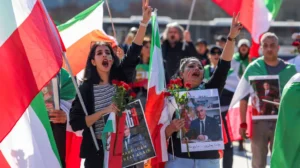
The decline in oil income is intensifying an economic catastrophe for Iran that has seen several days of deadly protests, and is the most significant challenge to the Shi’ite leadership in 40 years. The loss of oil has decreased the amount of foreign currency coming into Iran, which is what Iran needs to continue buying goods and maintain the currency (Rial) which has severely depreciated.
The spark that started the widespread demonstrations that have taken over Iran starting in late December was a rapid drop in the value of the Rial. Even though the government response may have quelled the protests, the economic underlying problems still exist. HR Activists in Iran say the numbers now exceed 5,000 deaths due to the protests.
What role are new U.S. sanctions playing in Iran’s oil squeeze?
The United States imposed new sanctions on Iran this month for its violent crackdown against the protesters. The U.S. Treasury Department stated that the sanctions are aimed at persons and organisations involved in
“laundering the proceeds of Iranian crude oil and petrochemical sales to foreign buyers”.
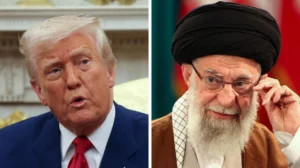
While the immediate threat of direct U.S. military action appears to have receded, Trump administration officials insist that all options remain on the table. At the same time, President Trump has threatened to impose a 25% tariff on countries that continue doing business with Iran, further endangering Tehran’s oil lifeline.
How important is Iran to global oil markets despite sanctions?
Iran remains a founding member of OPEC and accounts for roughly 3% of daily global oil output, making its production levels a key concern for energy markets. Some analysts estimate that Iran’s full-year crude sales totaled around $30 billion last year, with Tehran retaining roughly two-thirds as profit. In earlier years, profits were sometimes far higher, although precise figures are unavailable.
Crude prices have weakened globally due to increased output and concerns about economic growth. Brent crude now trades at about $66 a barrel, while U.S. benchmark crude sits near $61—both down nearly 20% from a year ago. Recent price volatility reflects trader anxiety over potential supply disruptions.
Why does OPEC have limited visibility into Iran’s oil sector?
An internet blackout imposed during the latest wave of protests has severely limited OPEC’s ability to monitor Iran’s oil production and exports. Gulf members of the organization report a significant breakdown in communication with Iranian counterparts, complicating efforts to maintain market stability.
According to Gregory Brew, senior analyst for Iran and energy at Eurasia Group, sanctions have forced Iran to continuously rebuild its network of intermediaries. “Everybody takes a cut,” he said, underscoring how sanctions dilute revenues at every stage of the supply chain.
Why is China central to Iran’s oil survival strategy?
Iran sells most of its crude to small, independent Chinese refiners known as “teapots.” These companies operate domestically, have limited exposure to international sanctions, and rely on cheap crude to remain competitive. Iranian oil accounts for about 15% of China’s crude imports, according to Capital Economics, though Beijing does not include these volumes in official statistics.
To sustain exports, Iran has leaned heavily on China and its shadow fleet, which now includes 613 tankers, among them 180 very large crude carriers, according to TankerTrackers.com. This strategy allowed Tehran to ship nearly two million barrels a day in October—a multiyear high—and to sell more oil in 2025 than in any year since 2018.
How is competition from Russia driving deeper discounts for Iranian oil?
Iran is no longer the only supplier offering discounted crude to Chinese refiners. Russian oil, shunned by Western markets since Moscow’s 2022 invasion of Ukraine, has also flooded into China. This has strengthened the bargaining position of Chinese buyers, enabling them to demand even steeper discounts from Iran.
Data from Kpler show that while Iranian crude traded at just $1 below Brent at the start of 2025, it was selling at an $8 discount by year’s end. The widening gap reflects both intensifying sanctions and growing competition from Russia.
Why are logistics becoming the biggest obstacle for Iran?
Moving Iranian crude to China has become increasingly complex and expensive. Ship-to-ship transfers, used to obscure a cargo’s origin, now cost more as each participant in the sanctioned trade raises prices to offset risk.
“The main problem is logistics,”
said Homayoun Falakshahi, head of crude oil analysis at Kpler.
“Logistics means higher cost. Logistics means more middlemen. And that means lower revenues.”
With the Trump administration aggressively pursuing shadow-fleet tankers in international waters, analysts expect shipping costs to rise further. The U.S. has already seized six oil tankers linked to Iran, Russia, or Venezuela and has pledged additional action.
Could geopolitical shifts worsen or improve Iran’s outlook?
Iran’s challenges have been compounded by Washington’s capture of Venezuelan strongman Nicolás Maduro this month, depriving Tehran of a long-standing ally and black-market oil partner. Trump’s stated aim to flood markets with Venezuelan crude to push prices lower could further pressure Iran, though rebuilding Venezuela’s dilapidated oil sector will take years.
In the short term, reduced Venezuelan shipments to China could allow Iran to claw back some market share. Still, Gulf OPEC delegates warn that Iran’s entire oil-export system could collapse if the regime itself falls apart.
“My base case is a slowdown or even a decline in Iranian oil production and Iranian oil exports,”
Brew said. A deterioration in Iran’s domestic situation—or outright regime collapse—would likely make that outlook even worse.