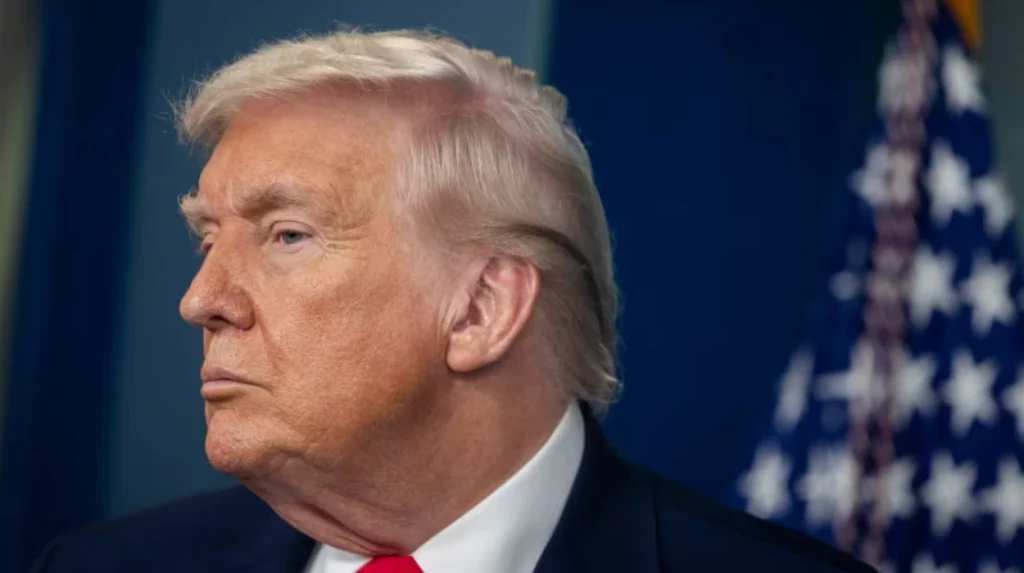
US President Donald Trump is struggling to rally Western allies behind his proposed “Board of Peace,” even as the initiative attracts support from Middle Eastern monarchies, authoritarian leaders, and at least one head of government facing allegations of war crimes.
Marketed as a bold new mechanism to resolve global conflicts, the board has instead raised alarms among America’s traditional allies, particularly after Trump suggested it could “possibly” replace the United Nations — a cornerstone of the post–World War II international order.
From Gaza Reconstruction to Global Power Broker
The Board of Peace was initially conceived as a narrowly focused body tied to Gaza’s reconstruction following Israel’s devastating two-year war on the enclave. It was first floated as part of a second phase of a US-brokered 20-point ceasefire plan in September and later gained legitimacy when the UN Security Council endorsed the framework in November.
But the board’s mission has since expanded dramatically. A draft charter obtained by CNN no longer even mentions Gaza. Instead, it rebrands the body as a permanent international organization tasked with promoting peace, stability, and governance in conflict zones worldwide.
This evolution has fueled suspicions that the initiative is less about reconstruction and more about reshaping global governance under US — and Trump’s personal — leadership.
An Organization Built Around Trump
Under the charter, Trump would serve as the board’s indefinite chairman, potentially extending his influence beyond his second presidential term. The structure places the Board of Peace above a “founding Executive Board,” a group dominated by Trump loyalists and political allies.
The executive board would include:
- Jared Kushner, Trump’s son-in-law
- Secretary of State Marco Rubio
- Special envoy Steve Witkoff
- Former UK Prime Minister Tony Blair
Critics argue the design concentrates extraordinary authority in the hands of a single leader, undermining the principles of multilateralism and checks and balances that underpin existing international institutions.
Who Has Signed On—and Why
Despite Western hesitation, several countries have accepted Trump’s invitation.
Among them are Saudi Arabia, the United Arab Emirates, Egypt, Qatar, Bahrain, Pakistan, Turkey, Morocco, Hungary, Kosovo, Argentina, Paraguay, Kazakhstan, Uzbekistan, Indonesia, and Vietnam.
Israeli Prime Minister Benjamin Netanyahu has also joined, despite facing an arrest warrant from the International Criminal Court and openly objecting to Turkish and Qatari participation in the Gaza-related executive body.
Armenia and Azerbaijan have signed on as well, following a US-brokered peace deal last year that grants Washington exclusive development access to a strategic transit corridor — a detail that has raised questions about whether economic leverage is being used to secure political alignment.
Belarusian leader Alexander Lukashenko, widely described as Europe’s last dictator and a close ally of Russian President Vladimir Putin, has also agreed to participate.
“I have some controversial people on it,”
Trump acknowledged, claiming that Putin himself has agreed to join — though the Kremlin has yet to formally confirm.
Russia, China, and the Price of Influence
Russia and China were both invited, with the offer of permanent seats priced at $1 billion. Putin has reportedly floated the idea of using Russian assets frozen in the United States to cover the cost — a proposal that has intensified concerns about allowing an active belligerent in a major war to help shape a global peace body.
China confirmed it received an invitation but stopped short of committing. Beijing emphasized it remains
“firmly committed to safeguarding the international system with the UN at its core,”
a pointed rebuke of Trump’s parallel structure.
Western Allies Push Back
Several US allies have either declined outright or expressed serious reservations.
- France and Norway rejected the invitation, citing concerns over how the board would coexist with the UN.
- Ukraine’s President Volodymyr Zelensky said it was impossible to sit alongside Russia and Belarus in any peace council.
- Italy’s Prime Minister Giorgia Meloni raised constitutional concerns and declined to attend the signing ceremony.
- Ireland said it would give the proposal “careful consideration.”
Canada’s Mark Carney signaled conditional interest but stressed that financial and governance details remain unresolved — reflecting broader unease among democratic partners.
A Pay-to-Play Peace Structure?
One of the most controversial elements of the board is its funding model. Member states would serve three-year terms, after which they could secure permanent seats for $1 billion.
The US administration claims the funds would go toward rebuilding Gaza, but critics argue the structure invites corruption, entrenches inequality among states, and allows wealth — rather than commitment to peace — to determine influence.
Diplomats warn the model risks turning global conflict resolution into a transactional enterprise.
Threat to the United Nations—or Parallel Power Center?
Trump’s repeated suggestion that the Board of Peace could replace the United Nations has deepened international anxiety. The charter refers vaguely to “institutions that have too often failed,” a line widely interpreted as a swipe at the UN without naming it.
The UN’s top humanitarian official, Tom Fletcher, rejected the notion outright.
“The United Nations isn’t going anywhere,”
Fletcher said, underscoring that Trump’s initiative lacks the legal authority, legitimacy, and universal backing required to supplant the UN system.
A Vision That Divides More Than It Unites
With roughly 35 of the 50 invited nations expected to attend a signing ceremony in Davos, Trump’s Board of Peace is moving forward — but without the consensus or credibility that typically underpins successful international institutions.
Rather than uniting the world around conflict resolution, the initiative has exposed deep fractures between democratic allies, authoritarian states, and competing visions of global order — raising the question of whether Trump’s boldest diplomatic project will promote peace or further erode it.