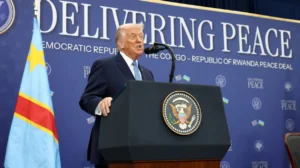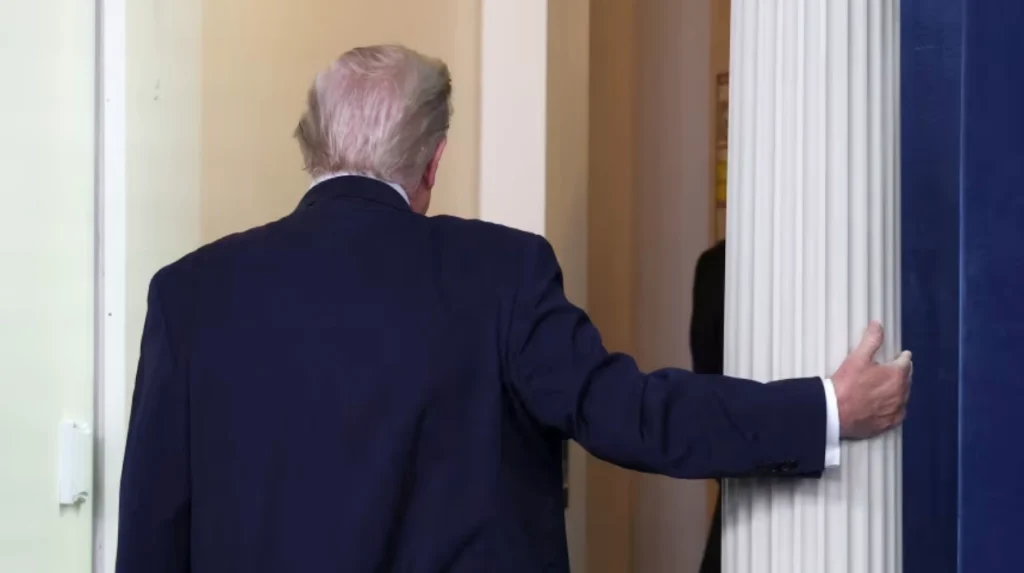
President Donald Trump arrives in Davos facing not applause but an urgent diplomatic intervention, after days of escalating threats against America’s closest allies over Greenland. What was once dismissed as rhetorical bravado has now evolved into a fast-blooming transatlantic crisis—one that European officials fear could place the seven-decade-old US–Europe alliance under unprecedented strain.
Senior European leaders are using this week’s World Economic Forum as a staging ground for damage control, hoping to prevent Trump’s fixation on Greenland from tipping into a full-blown geopolitical rupture. According to people familiar with the discussions, the priority is not only de-escalation, but containment—before Trump’s rhetoric hardens into irreversible policy.
Are Even Trump’s Advisers Looking for an Exit Strategy?
The push from European capitals comes amid growing unease inside Trump’s own orbit. Several advisers have privately expressed misgivings about the president’s language and are quietly searching for an off-ramp that allows Trump to claim victory without detonating relations with Europe.
In the near term, European efforts are focused on cooling tensions after Trump threatened new tariffs on any ally opposing his demand for “complete and total control” of Greenland. But the broader concern runs deeper: how to divert Trump from what appears to be a personal campaign to acquire the Danish territory by force of economic coercion.
Can Symbolic Deals Replace a Dangerous Power Grab?
One option under discussion is expanding existing treaties that already allow the US to maintain military bases and strategic assets on Greenland. Western diplomats have floated the idea of pairing this with new commercial and economic agreements—potentially capped with a high-profile signing ceremony that would allow Trump to present the outcome as a diplomatic triumph.
Another proposal gaining quiet traction is placing Greenland under a Compact of Free Association with the United States. Such an arrangement would preserve Greenland’s current political status while granting Washington enhanced security access in exchange for financial assistance. Similar agreements already exist between the US and Palau, the Marshall Islands, and the Federated States of Micronesia.
Is China the Pretext—or the Real Target?
There have also been preliminary discussions about renegotiating the 1951 US–Denmark–Greenland agreement to explicitly prohibit Chinese investment on the island. While framed as a security measure, critics see this as an attempt to legitimize US pressure under the banner of countering Beijing.
Despite Denmark’s firm resistance to relinquishing sovereignty, some senior Trump administration officials have continued to work on a proposal to outright purchase Greenland—reviving an idea widely dismissed as colonial and anachronistic when Trump first raised it years ago.
Does Trump Believe NATO Will Applaud?
Before departing for Davos, Trump told reporters he would hold a series of meetings on Greenland, predicting he would strike a deal that is “very good for everybody.” He claimed NATO would be “very happy” and that Greenlanders—who have openly protested US annexation threats—would be “thrilled.”
Among those expected to meet Trump privately is NATO Secretary General Mark Rutte, who has invested heavily in maintaining a functional relationship with the US president. Yet Trump’s public optimism stands in stark contrast to his continued escalation.
How Far Is Trump Willing to Go?
Even as diplomatic channels hum in the background, Trump has doubled down on his demands. Asked how far he would go to secure control of Greenland, he replied ominously: “You’ll find out.” He also suggested he could explore alternative measures should the US Supreme Court restrict his ability to use tariffs as leverage.
The White House has sought to recast the issue as a strategic win for the alliance. Spokesperson Anna Kelly argued that NATO would become “far more formidable” with Greenland under US control and claimed Greenlanders would be better protected from modern Arctic threats.
Do Europe’s Allies Have a Coherent Plan to Push Back?
Across Europe, there is still no clear consensus on how to respond if Trump escalates further. Ian Bremmer of Eurasia Group warned that hesitation could prove costly.
“They have to respond,”
he said.
“And they have to be willing to do it with sufficient numbers and force to make a difference.”
The looming standoff underscores a shift in European thinking. After a year of appeasement—where allies often chose accommodation over confrontation—Trump’s Greenland threats have forced a recalibration. What once seemed abstract is now viewed as an existential challenge to European sovereignty.
Are Tariffs the Breaking Point for NATO Unity?
Trump has long argued Greenland is vital for US national security and rich in untapped minerals. But his recent pledge to impose tariffs on eight European countries, coupled with public attacks on leaders in Norway and France, has triggered alarm across the continent.
European officials warn that weaponizing trade against allies could fracture NATO, a 32-member alliance built on mutual trust. Speaking in Davos, French President Emmanuel Macron condemned the “endless accumulation of new tariffs,” calling them fundamentally unacceptable—especially when used to undermine territorial sovereignty.
European Commission President Ursula von der Leyen went further, urging the bloc to pursue “a new form of European independence,” signaling a possible long-term shift away from reliance on Washington.
What Retaliation Options Are Actually on the Table?
Behind closed doors, European diplomats have explored a range of countermeasures. These include reviving €93 billion ($109 billion) in retaliatory tariffs that were suspended after last year’s trade deal with the US. More extreme options—such as restricting US access to European military bases, increasing sales of US treasuries, or limiting American corporate operations—have also been discussed.
The EU’s Anti-Coercion Instrument, designed to punish states that attempt economic intimidation, remains a last-resort tool. Deploying it would require unanimous approval, making it politically difficult but symbolically powerful.
Is Trump Bluffing—or Testing the Limits?
Some within Trump’s circle believe he is posturing, probing how far he can push without triggering a unified response. Few expect military intervention. Still, there is growing concern that even without force, Trump’s tactics could cause lasting damage to transatlantic ties.
Complicating matters further is Trump’s admission that owning Greenland has become “psychologically” important—a personal victory he increasingly appears to crave.
As Bremmer put it, capturing the mood in European capitals ahead of Trump’s arrival:
“It’s trepidation. Nobody knows what he’s going to say—possibly not even him.”