Three of the most senior Roman Catholic leaders in the United States issued a striking and unusually forceful statement on Monday, warning that America’s long-standing claim to moral leadership on the global stage is now under serious question. The intervention marks a significant escalation in the US Catholic Church’s critique of national leadership and foreign policy direction.
Without mentioning President Donald Trump by name, the statement challenged the governing principles shaping American power abroad, arguing that the country’s ethical foundation for confronting injustice and violence overseas is eroding.
A Defining Moral Debate Since the Cold War
“In 2026, the United States has entered the most profound and searing debate about the moral foundation for America’s actions in the world since the end of the Cold War,”
the statement declared.
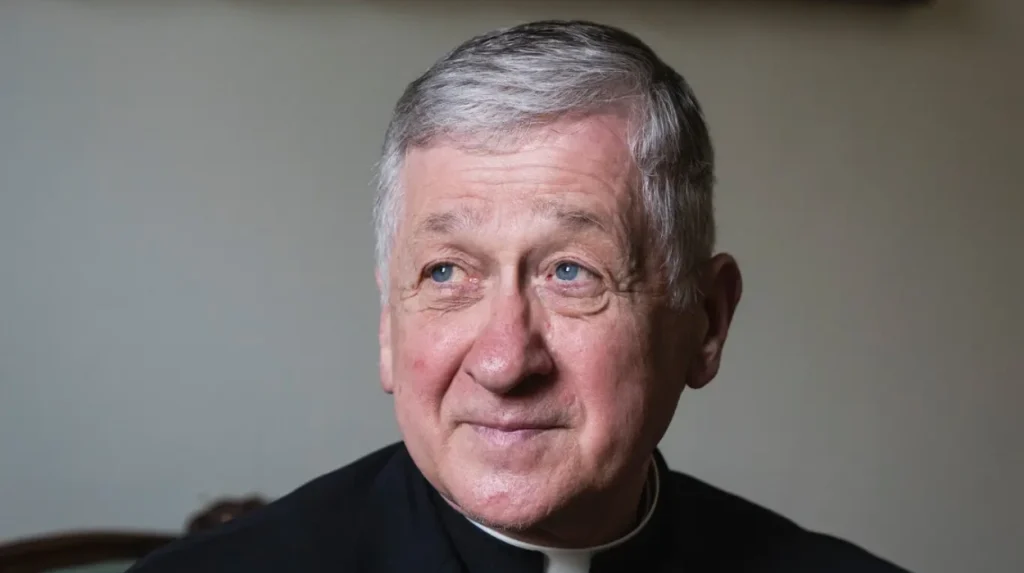
The message was jointly signed by Cardinal Blase Cupich of Chicago, Cardinal Robert McElroy of Washington, and Cardinal Joseph Tobin of Newark—three of the most influential Catholic voices in the country. Their intervention is notable not only for its content, but for its timing, arriving amid rising global tensions and an increasingly unilateral US posture.
Military Force as Policy, Not Last Resort?
Citing recent developments involving Venezuela, Ukraine, and Greenland, the cardinals raised fundamental concerns about how and when the United States uses military power. They called for a
“genuinely moral foreign policy” in which force is employed only “
as a last resort in extreme situations,” rather than as a routine instrument of national strategy.
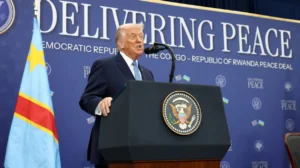
While the statement avoided policy prescriptions or detailed references to specific operations, the context was unmistakable. President Trump has publicly threatened to seize Greenland “the hard way.” In Venezuela, US forces attacked vessels accused of narcotics trafficking and carried out the extrajudicial capture and removal of President Nicolás Maduro and his wife—actions taken without congressional authorization.
A Deliberate Move Beyond Partisan Politics
The cardinals emphasized that their message was not intended as a partisan rebuke, but as a broader moral appeal. Still, their critique reflects growing unease within religious institutions about the normalization of coercion and unilateralism in US foreign policy.
Their language signals concern not only with individual decisions, but with a deeper philosophical shift in how power is justified and exercised.
Vatican Alignment on Sovereignty and Peace
The statement closely mirrors positions articulated by Pope Leo XIV, who has repeatedly stressed the importance of national sovereignty, dialogue, and restraint. The pope has publicly called for peaceful engagement in Venezuela and Ukraine, and warned that President Trump’s proposed peace framework for Ukraine could fundamentally alter transatlantic relations.
In interviews, the American cardinals described a world increasingly shaped by domination rather than cooperation—an evolution they see as incompatible with Catholic social teaching.
The Postwar Moral Consensus Under Threat
“The post–World War II consensus of dialogue among nations, respect for sovereignty, and the refusal to use war to pursue dominance is shifting away,”
Cardinal McElroy said in an interview.
McElroy, appointed archbishop of Washington by Pope Francis shortly before Trump’s second inauguration in 2025, has emerged as a central voice articulating Catholic concerns about global order, ethics, and the use of force.
Alarm Inside the College of Cardinals
The statement was partly inspired by a closed-door meeting earlier this month in Rome, where Pope Leo convened cardinals from around the world. According to Cardinal Cupich, the gathering revealed widespread anxiety about global instability and the role of the United States in accelerating it.
Among the issues troubling Vatican officials was the dismantling of the US Agency for International Development last year, a move that cut off critical assistance to some of the world’s poorest populations.
Pope Leo’s Vision: Diplomacy Over Force
Soon after the meeting, Pope Leo delivered his annual address to the Vatican’s diplomatic corps, condemning what he described as “a diplomacy based on force” and a growing “zeal for war.” Though he did not name any leaders, the message was widely interpreted as a critique of current global trends.
Since succeeding Pope Francis in May, Leo has maintained a lower public profile but remained committed to similar priorities: solidarity with the vulnerable, defense of human dignity, and resistance to policies that marginalize migrants and the poor.
A Careful but Persistent Challenge to Washington
While Pope Leo has avoided direct confrontation with President Trump, his actions suggest mounting concern. As Trump intensified deportations in Chicago last October, the pope urged US bishops to publicly defend immigrants and later encouraged Catholics to engage with a bishops’ statement condemning the administration’s approach.
The cardinals’ new statement frames Leo’s evolving outlook as an “ethical compass” for American foreign policy—one they argue must guide decision-making in an increasingly volatile world.
Human Rights, Life, and Moral Consistency
Beyond foreign policy, the statement reiterates Catholic opposition to abortion and euthanasia, describing the right to life as the foundation of all other rights. It also condemns cuts to foreign aid and warns against “violations of conscience and religious freedom” carried out in the name of ideological or religious purity. Such policies, the cardinals argue, undermine both freedom and human dignity.
A Direct Rebuttal to Power Without Restraint
The three cardinals collectively lead dioceses encompassing nearly four million Catholics, more than 550 parishes, and hundreds of schools—giving their words significant moral and institutional weight.
Their critique stands in stark contrast to President Trump’s recent remarks to The New York Times, in which he said his decisions as commander in chief are constrained only by “his own morality.”
“I don’t need international law,”
Trump said.
“I’m not looking to hurt people.”
Cardinal Tobin responded bluntly, expressing concern over what he described as a “Darwinian calculus” emerging within the administration—one in which power determines worth.
“I would say that’s less than human,”
he said.