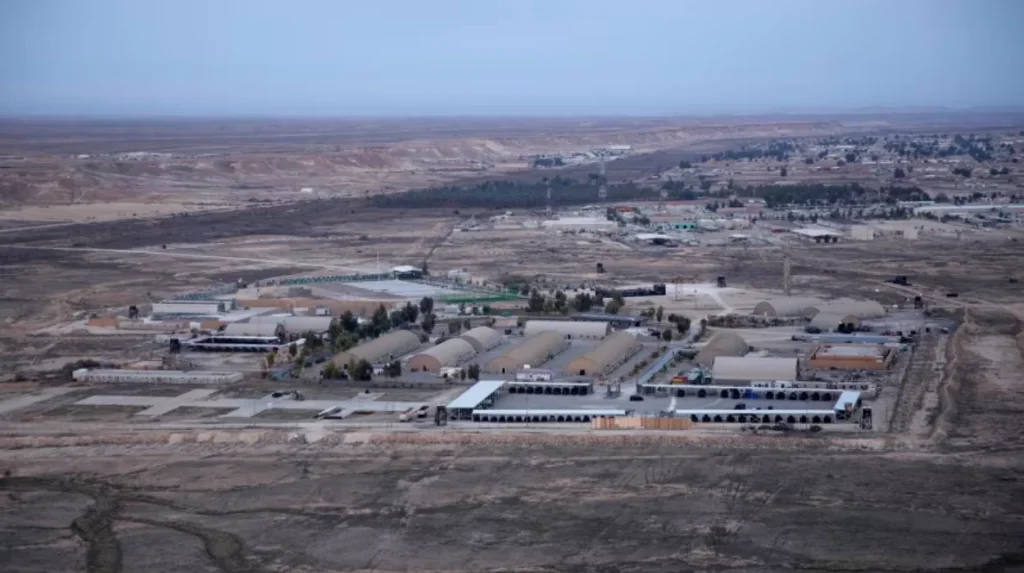
The Iraqi declaration that the United States military has achieved a “full withdrawal” from its military bases in Iraq’s federal territory is a turning point in the country’s past, present, and future plans pertaining to its security. The departure of the last United States advisers from the Al-Asad Air Base, which was one of the most important United States military bases in the Middle East, is more than just a strategy shift.
Though Baghdad has described the redeployment as regaining sovereignty, there also appear to be more profound implications for Iraqi internal security sector capacity and the future of anti-ISIS missions and the rising Iran group militia’s influence.
This development takes place in a context of increasing volatility in the region, growing US-Iran tensions, and unresolved struggles for power in Iraq itself. This might suggest that the conclusion of the formal mission of the coalition in federal Iraq is not necessarily the beginning of the end, but perhaps rather the start of something new.
Al-Asad Air Base: From Cornerstone of US Power to Empty Corridors
The Al-Asad airbase in the province of Anbar has long been a representation of US military influence in Iraq. Founded as a strategic regional hub in the wake of the invasion in 2003, the airbase contained as many as seventy thousand US military personnel at one time during the height of the conflict between 2006-2008 during the sectarian wars.
The US military presence peaked when there were 170,000 US troops based in Iraq. Despite the withdrawal ordered by US President Barack Obama in 2011, Al-Asad Airbase saw renewed importance when the US returned troops to Iraq in 2014, at the request of the Iraqi government, to meet the growing threat of the Islamic State group (ISIS). During this time,ISIS had already taken control of one-third of Iraq, including the country’s second-largest city, Mosul.
In this regard, the video released by the Iraqi Ministry of Defense, featuring high-level military officers pacing empty corridors in the Al-Asad base, assumes high symbolic meaning. However, symbolism does not translate into security stability.
A Gradual Drawdown, Not a Sudden Exit
Despite allegations of sudden withdrawal, the American military engagement in Iraq has been gradually scaling down for some years now. Since December 2021, when the United States officially halted its “combat role” there, the country has kept about 2,500 troops in the country.
The Iraqi government asked for a withdrawal plan in 2023, due to pressure from Iran-backed factions. Al-Asad Base itself had been hit by dozens of rockets and drones, especially after October 7, 2023, due to tensions in the region following the Israel and Gaza conflict.
Just last August 2024, an incident in the base resulted in the injuring of five US military personnel and two contractors, further emphasizing the vulnerability of US forces and the price they must continue to pay for their stay in the country.
Sovereignty vs. Reality: Can Iraqi Forces Fill the Gap?
Iraqi government officials currently claim that
“the country’s military has ‘sufficient capability’ to protect its territory.”
The Iraqi security sector is apparently strong on paper, boasting “over 300,000 forces within the army, federal police, counter-terrorism forces, and Popular Mobilization Forces.”
Capability does not by itself imply cohesion, however. Iraqi security sector institutions continue to be disjointed with manifestations such as command lines that converge or overlap and lack of sector focus and emphasis. Its so-called elite forces like the CTS are very capable and overstretched, while other forces lack capability in logistics and intelligence analysis that has conventionally received support from the US-led international coalition.
Indeed, although ISIS has been territorially conquered as of 2017, it has continued to operate. Nonetheless, based on security briefs, the group reportedly undertakes dozens of small-scale offensives every year, especially in the outskirts of Anbar, Diyala, Kirkuk, and Salahuddin provinces. Additionally, the Iraqi military could find it difficult to thwart an ISIS comeback without the cover of US ISR capabilities.
The Kurdistan Exception: A Divided Sovereignty
Crucially, US forces have not fully left Iraq. Several hundred troops remain stationed at Harir Air Base in Erbil, within the Kurdistan Region. This underscores a fundamental contradiction: while Baghdad claims full sovereignty, it does not exercise complete control over Iraqi territory.
The Kurdistan Region operates its own government, parliament, and security forces under the Iraqi constitution. For Washington, Erbil offers a relatively stable and politically receptive environment compared to federal Iraq. For Baghdad, however, the continued US presence there highlights enduring structural weaknesses in Iraqi state authority.
This dual-track withdrawal risks deepening internal divisions, particularly if Erbil continues to serve as a logistical hub for coalition operations in neighboring Syria.
Iran, Militias, and the Shifting Balance of Power
One of the most pressing political implications of the US withdrawal is what it means for disarmament talks for other non-state militias that are armed. Iran-backed militias such as Kataib Hezbollah and Harakat al-Nujaba have long maintained their arsenals because of the US presence in Iraq.
“With federal Iraq essentially devoid of US troops, Baghdad presumably has newfound leverage.”
Yet in reality, such organizations “are highly entrenched.”
This is true because
“many of these groups have already been formally integrated into the Popular Mobilization Forces and receive government subsidies, and have considerable sway over the Parliament, Ministries, and strategic sectors of the economy.”
The Iran ballistic missile attack in Al-Asad in 2020 in response to the killing of Qasem Soleimani has clearly shown how the territory of Iraq has been used as an arena to rival the supremacy of the US-Iran rivalry. The withdrawal may lower the levels of these rivalry encounters; however, it may also make Iraq more vulnerable to Iranian influence.
A Regional Recalibration
From Washington’s perspective, the drawdown reflects a broader strategic shift away from large-scale Middle Eastern deployments toward competition with China and Russia. Yet the US is not fully disengaging. Ongoing cooperation with Iraq will continue through training missions, arms sales, intelligence sharing, and potential joint counter-ISIS operations if threats escalate.
For Iraq, the challenge is balancing sovereignty with security. Declaring the coalition mission concluded may satisfy domestic political demands, but it does not eliminate external threats or internal fragmentation.