President Donald Trump’s newly announced “Board of Peace” for Gaza is being marketed as a bold, efficient alternative to traditional international reconstruction mechanisms. Nevertheless, the fact that the board members can retain a permanent spot at the table by donating $1 billion has sparked alarming reactions from diplomats, aid representatives, and international law scholars. Instead, a sinister agenda seems to be lurking beneath the surface in this reconstruction process, which seems to privatize the post-war order, Palestinians, and reconstruct for profit.
Although the White House has emphasized that all the funds will be used for the reconstruction of Gaza and that the board will “avoid the problem of administrative bloat that plagues international organizations,” others see the move as one that could result in the loss of legitimacy and future stability in one of the world’s most unstable territories.
How Much Does Gaza Actually Need—and Who Controls the Money?
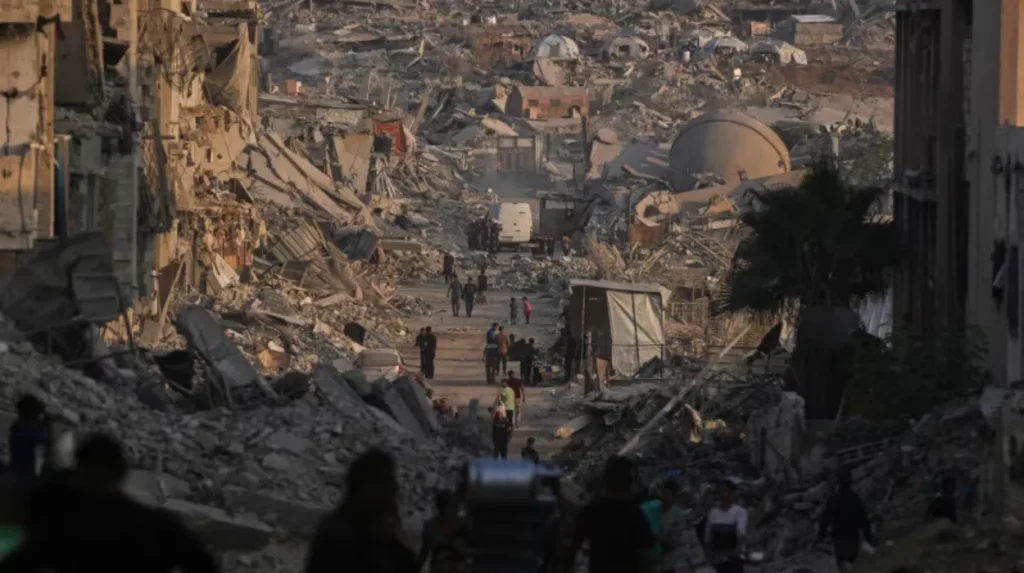
It is estimated that rebuilding Gaza after two years of war between Israel and Hamas will take some $40 billion to $50 billion, according to estimates from the World Bank, UN, and EU. The rebuilding will include housing, electricity and water infrastructure, healthcare systems, and economic revitalization. Gaza’s physical structures are in ruins as the number of residential buildings destroyed or damaged stands at more than 60 percent, critical hospitals lie inoperable, and water and sewage systems are working below a fraction of prewar capacity.
Against that backdrop, a $1 billion buy-in—while substantial—covers only a small fraction of reconstruction needs. The larger issue, however, is not the amount but the control mechanism. The model effectively grants permanent decision-making power to those with sufficient capital, replacing multilateral oversight with a donor-dominated hierarchy chaired by the US president himself.
This departs sharply from established post-conflict frameworks, which typically rely on UN agencies, development banks, and host-nation authorities to ensure transparency and inclusivity.
Is This Reconstruction or a Corporate Boardroom?
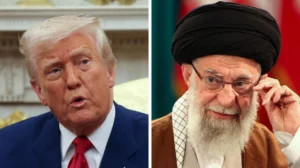
Trump has framed the “Board of Peace” as the “most prestigious board ever assembled,” featuring figures such as former UK Prime Minister Tony Blair, Canadian Prime Minister Mark Carney, US Secretary of State Marco Rubio, World Bank President Ajay Banga, billionaire investor Marc Rowan, and Trump’s own inner circle—including Jared Kushner.
The composition blurs the line between statecraft, finance, and personal networks. While some members bring experience in governance or development finance, others raise concerns about conflicts of interest, particularly given Gaza’s future real estate, energy, and infrastructure potential.
Unlike UN-managed trust funds or World Bank–supervised reconstruction programs, the board’s decision-making criteria, procurement rules, and oversight mechanisms remain opaque. There is no publicly articulated framework for anti-corruption safeguards, local consultation, or independent auditing—critical elements in post-conflict environments historically vulnerable to elite capture.
Where Are the Palestinians?
Perhaps the most glaring omission is the absence of Palestinian political representation. The Palestinian Authority (PA), which governs parts of the occupied West Bank and is widely expected by the international community to eventually administer Gaza, has no seat on the board.
Instead, governance will be handled by a Palestinian technocratic committee, a model that
critics argue strips political agency from Palestinians at precisely the moment when self-determination should be central. Technocratic governance may offer short-term efficiency, but without political legitimacy it risks being viewed as externally imposed—particularly in a territory shaped by decades of occupation, blockade, and conflict.
Historically, post-war reconstruction efforts that bypass local political actors—such as in Iraq after 2003—have struggled to achieve durable stability, despite massive financial investment.
A UN-Backed Plan—or a US-Dominated One?
Although described as “UN-backed,” the initiative appears overwhelmingly US-driven, with Trump chairing the board and Washington shaping its structure. This has already generated friction with key stakeholders.
Israeli Prime Minister Benjamin Netanyahu has openly opposed the inclusion of Turkey and Qatar in the supporting “Gaza executive board,” accusing them of backing Hamas. His objection underscores a deeper problem: the plan lacks consensus among the very actors whose cooperation is essential for Gaza’s future security, borders, and economic access.
Without Israeli buy-in, reconstruction faces logistical bottlenecks. Without Palestinian political inclusion, legitimacy is weak. Without regional alignment, funding and implementation risk paralysis.
Does Paying for Power Undermine International Norms?
The $1 billion permanent-seat provision sets a troubling precedent. International governance structures—from the UN Security Council to the World Bank—are already criticized for privileging wealth and power. This model goes further by explicitly monetizing influence.
Steven Cook of the Council on Foreign Relations has previously warned that reconstruction efforts lacking political legitimacy often “stabilize infrastructure but destabilize societies.” By tying authority to financial contribution, the Board of Peace risks alienating Gazans who may perceive the project as elite-driven social engineering rather than recovery rooted in justice and rights.
Moreover, the approach may deter traditional donors—particularly in Europe—who prefer multilateral mechanisms governed by international law rather than ad hoc political boards.
Can This Model Actually Deliver Stability?
Trump administration officials argue that the board’s streamlined structure will avoid the inefficiencies that plagued past efforts. Yet history suggests that speed without legitimacy rarely produces lasting peace.
Gaza’s challenges are not purely material. Rebuilding homes without addressing:
- movement restrictions,
- political reconciliation,
- security arrangements,
- and economic sovereignty
risks creating a rebuilt but still unstable enclave.
Without a credible political horizon for Palestinians—and without clear accountability mechanisms—the Board of Peace may struggle to deliver more than cosmetic recovery.