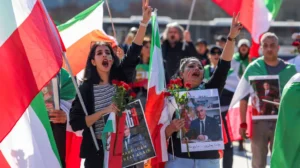
Iran’s Supreme Leader Ayatollah Ali Khamenei acknowledged on Saturday that thousands of Iranians were killed during more than two weeks of nationwide unrest, marking one of the deadliest episodes of internal repression in the Islamic Republic’s history. However, rather than addressing the role of Iran’s security forces, Khamenei placed responsibility squarely on US President Donald Trump, accusing him of actively encouraging the protests and promising demonstrators American “military support.”
The protests, which erupted in late December, were initially driven by public anger over Iran’s dire economic conditions, including inflation, unemployment, and shortages of essential goods. They quickly escalated into a broader challenge to the legitimacy of the ruling system, triggering a violent crackdown by state forces.
How Khamenei Framed the Protests as a Foreign Plot
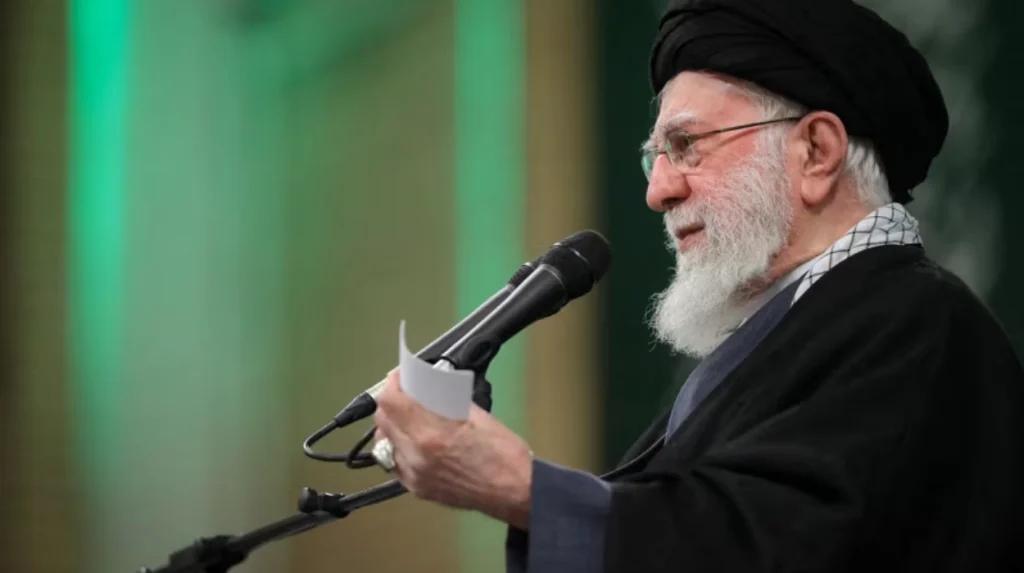
In a nationally televised speech described on his official website, the 86-year-old supreme leader labeled Trump a “criminal” and said the US president was responsible “both for the casualties and the damage” caused during the unrest.
Khamenei described those involved in the protests not as citizens expressing grievances, but as “rioters” divided into two categories:
- Individuals allegedly supported, funded, and trained by the United States and Israel, and
- Young people whom he described as “naive individuals” manipulated by foreign-backed ringleaders.
According to Khamenei, these protesters targeted power facilities, mosques, educational institutions, banks, medical facilities, and grocery stores—claims frequently used by Iranian authorities to justify harsh repression. As in previous crises, the government provided no evidence to substantiate allegations of foreign orchestration.
What Was Left Unsaid About Iran’s Security Forces?
Notably absent from Khamenei’s speech was any acknowledgment of the conduct of Iran’s own security forces. Witnesses and human rights organizations have documented live ammunition being fired at protesters, including from rooftops, as well as the widespread use of the Basij—a volunteer paramilitary force established by Khamenei himself—to violently suppress demonstrations.
According to the US-based Human Rights Activists News Agency (HRANA), more than 3,000 people were killed during the unrest. Khamenei’s comments appeared to implicitly acknowledge the scale of the bloodshed, even as his government continued to dispute the figures.
Conflicting Narratives Over the Death Toll
The Iranian government has sent mixed signals regarding the scale of the killings. Earlier in the week, Foreign Minister Abbas Araghchi dismissed reports of “thousands” killed, telling Fox News that the number was actually in the hundreds, and that higher estimates were part of a “misinformation campaign.”
Yet Khamenei’s own remarks—stating that the “rioters” had “killed several thousand” people—appeared to contradict the foreign minister’s position, underscoring internal inconsistencies within the Iranian leadership’s messaging.
Trump’s Role: Encouragement or Incitement?
During the unrest, Trump publicly encouraged protesters to continue demonstrating and urged them to “take over” state institutions, promising that “help is on its way.” These statements were seized upon by Tehran as evidence of foreign interference.
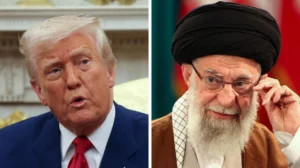
In response to Khamenei’s accusations, Trump escalated his rhetoric, calling for new leadership in Iran and describing the supreme leader as a “sick man” who should
“run his country properly and stop killing people.”
In an interview with Politico, Trump accused Khamenei of presiding over “the complete destruction of the country” and using violence “at levels never seen before” to maintain control.
Economic Crisis as the Underlying Catalyst
Despite his confrontational tone, Khamenei acknowledged that Iran’s economic situation is “truly difficult.” However, he framed hardship as a reason for unity behind the Islamic system rather than reform.
He urged officials to intensify efforts to supply essential goods, livestock feed, and basic commodities—an implicit admission that shortages and mismanagement were central drivers of public anger.
Citing large pro-government rallies earlier in the week, Khamenei claimed that the protests had been “extinguished,” a familiar declaration following periods of unrest.
Internet Blackouts and Information Control
As security forces cracked down, Iranian authorities shut down the internet nationwide on January 8, a move widely interpreted as an effort to prevent coordination and limit documentation of abuses.
Cybersecurity watchdog NetBlocks reported a “slight rise” in connectivity on Saturday but said overall access remained at just 2% of normal levels, with no sign of a full restoration.
State-linked Mehr News Agency said access had been restored to “some subscribers,” framing the shutdown as a response to “terrorist unrest” and a measure to protect national security. Some international landline calls and local text messaging services also appeared to be partially restored.
What Fate Awaits the Protesters?
Khamenei vowed consequences for those involved in the “riots” but offered no details.
“We will not let go of the domestic criminals and — more importantly — the international criminals,”
he said.
According to HRANA, more than 24,000 protesters have been arrested, raising serious concerns about mass trials and severe sentencing.
Those fears intensified after Tehran’s prosecutor suggested that some detainees could face the death penalty, a claim later partially walked back by Iranian officials. The State Department said Iranian authorities planned to execute protester Erfan Soltani, though his family later said the execution was postponed. Iran’s judiciary insists he was never sentenced to death.
Trump claimed he received assurances that no executions would take place, though Iranian prosecutors refused to provide clarity.
“Our response is firm, deterrent and swift,”
Tehran Prosecutor Ali Salehi said, neither confirming nor denying plans for mass executions.
A Regime Under Pressure, a Region on Edge
The crisis has revealed deep fractures within Iran’s political system, exposed the limits of repression as a tool of governance, and intensified confrontation with the United States. By blaming Trump for the bloodshed, Khamenei seeks to externalize responsibility and rally nationalist sentiment—but the scale of unrest, arrests, and casualties suggests a legitimacy crisis that foreign scapegoats may not resolve.
At the same time, Trump’s inflammatory rhetoric and encouragement of protests have given Tehran ammunition to justify repression while raising fears of further escalation between two long-standing adversaries.