The Trump administration has repeatedly insisted that it retains a wide range of military options to respond if Iran’s leadership escalates violence against protesters. In reality, the scope of those options has shrunk considerably, constrained by shifting force deployments, depleted weapons stockpiles, and growing resistance in Congress to another Middle East conflict.
While the White House projects confidence, senior defense officials privately acknowledge that the military menu available to the president is far thinner than it was even a year ago.
US forces redeployed as Middle East presence thins
Several key US military assets that once bolstered American power in the Middle East are no longer in the region. Ships and troops previously available for rapid deployment have been reassigned to the Caribbean following US operations involving Venezuela.
Two aircraft carriers—the USS Vinson and USS Nimitz—sent to the Middle East in June have long since departed. The USS Ford, once positioned for regional contingencies, remains in the Caribbean. Meanwhile, a Patriot missile defense system transferred from South Korea to the Middle East last year was returned to the Korean Peninsula in November, according to Gen. Xavier Brunson.
Administration officials have confirmed that no major movements of troops or assets are planned, undermining public claims that the US is preparing for a decisive military response.
Limited strike options and mounting congressional skepticism
Trump still retains the authority to order targeted airstrikes against Iranian military installations or regime leadership. However, those options are more limited than in June, when US bombers struck Iran’s nuclear facilities after flying across the Atlantic.
Lawmakers from both parties are increasingly skeptical that military force would achieve any meaningful political objective. Sen. Jack Reed, the top Democrat on the Armed Services Committee, questioned the strategic logic behind potential strikes.
“What’s the objective? How does military force get you to that objective?”
Reed asked, warning that airstrikes could fail to help protesters while dragging the US into another prolonged conflict.
Even Republican allies have ruled out ground operations, emphasizing that Washington has no appetite for “boots on the ground.”
Weapons stockpiles strained by global operations
Another growing constraint is the erosion of US weapons stockpiles, driven by sustained military operations in the Red Sea, Iran-related missions, and the recent intervention involving Venezuela.
Air defense interceptors are of particular concern. With approximately 10,000 US troops stationed at Al-Udeid Air Base in Qatar, along with smaller deployments in Iraq, Syria, and Jordan, American forces remain within range of Iran’s extensive missile and rocket arsenal.
Former defense officials warn that if Iran retaliates forcefully following a US strike, interceptor supplies could quickly become inadequate.
“If it does become a longer-term volley of strikes, then your interceptor capacity becomes all the more important,”
one former official said.
“We could get in a sticky situation very quickly.”
White House rhetoric escalates as protests intensify
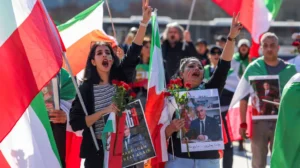
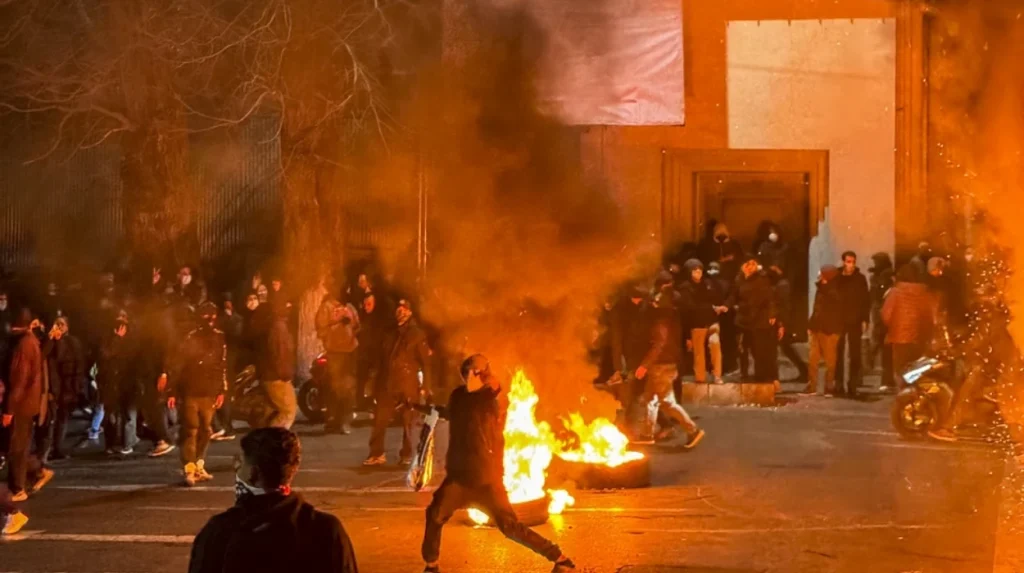
Protests across Iran, sparked by inflation and government policies, have spread nationwide since December. Human rights groups estimate that up to 2,000 demonstrators have been killed as security forces cracked down.
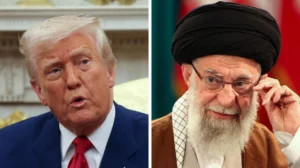
Trump has escalated his rhetoric in response. In a Truth Social post, he warned that Iran’s “killers and abusers” would “pay a big price,” announcing the cancellation of all diplomatic engagements with Iranian officials until the violence stops. Despite this rhetoric, administration officials privately told POLITICO that no imminent military escalation is underway, highlighting a gap between public messaging and operational reality.
Cyber warfare and rapid strikes remain on the table
Defense officials say the administration could rely on rapid, flexible strike options rather than mass deployments, including long-range bombing missions launched directly from the United States. Offensive cyber operations are also being considered if diplomacy fails.
Retired Vice Adm. John Miller said any strike would likely focus on regime “centers of gravity,” such as command bunkers, military facilities, and communications infrastructure—aimed at signaling resolve without triggering a wider war.
Still, even these limited options face political obstacles.
Congressional pushback threatens presidential authority
Congressional resistance is emerging as a significant check on Trump’s freedom to act. Last week, five Republicans joined Democrats to advance legislation restricting the president’s ability to use military force in Venezuela—one of the strongest rebukes of Trump’s war powers to date.
Lawmakers warn similar opposition could surface if Iran becomes the next target.
“If you’re going to aggressively go into another country militarily, you, under the Constitution, have to ask permission of Congress,”
said Sen. Rand Paul.
With no clear strategy, limited military assets, and rising political resistance, Trump’s threats toward Iran may prove far easier to issue than to execute, leaving Washington walking a narrow line between deterrence and escalation.