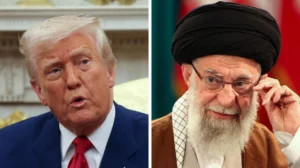
The current President of the United States, Joe Biden, and the future President, Donald Trump, both have different opinions related to US foreign policy. Trump’s main focus is to revive his “America First” approach. He strongly opposed Joe Biden’s foreign policy. According to Trump, his policy is historically horrible. Trump plans to make much of the changes in already defined US foreign policy by Biden. He wants to improve relations with Russian President Putin. This wish may reduce US military support for Ukraine. Also, the Russia-US growing partnership has hinted at pulling out of NATO. Trump praised the autocratic leaders and never wanted to promote democracy at the international level. Trump is also not in favor of the international agreement and the Paris Climate Accord.
Despite these differences, Trump decided to compromise with Biden’s policies in some areas. Different nations of the country rather than Europe, Russia, and Ukraine. Trump’s foreign policy approach may be the same as Biden’s.
This suggests that, while Trump aims for disruption, some aspects of his foreign policy may resemble Biden’s.
According to analysts, it is not common for the United States to suddenly change its foreign policy. This is because the nation has strong and steady influence through its military, economy, and politics. Pressure from neighboring nations and Congress forced new leaders to stick to the old policies. In this way, it is not easy for any new president to change the US approach to foreign relations.
The CEO of the Center for a New American Security, Richard Fontaine, explains that despite the different opinions of Biden and Trump, US foreign policy remains the same. But media focus on the differences while many points are similar.
In Biden’s era, he kept most of Trump’s defined policies, particularly those related to China and Russia, where both leaders emphasized competition. Biden slightly changed its policy related to Cuba and Saudi Arabia. But these modifications were small and for a shorter period. Despite knowing about Saudi Arabia’s human rights situation, he did not make major changes in the US foreign policy and continued to maintain strong relations with the country.
The slight shift in US policy towards Saudi Arabia highlights the importance of balancing US interests. Initially, Biden’s desire to isolate the Kingdom but the oil power of the Saudi nation forced Biden to restore arms shipments. This highlights Biden’s approach to the recognition of Saudi Arabia’s influence in global politics. This strategy aligns with Trump’s approach to strengthening US-Saudi relations.
In the case of China, both leaders have taken a firm stance. Biden continued most of the Trump-set policies, including a military presence in East Asia and tariffs on Chinese goods. While Biden seeks dialogue with President Xi, Trump also engaged similarly. However, the slight difference is on the issue of Taiwan. In this case, Biden is pledging a defense against China, while Trump has been more uncertain, though his advisors favor a strong defense.
Regarding Iran, Biden follows Trump’s policy with a slight lessening of the strict rules. He allowed the nation to increase its oil exports. However, it is expected that Trump will take the tougher approach, despite knowing the economic risks.
Since he withdrew from the 2015 nuclear agreement, Trump has had to contend with a more sophisticated Iranian nuclear threat throughout his second administration. Trump is now indicating that he is open to renegotiating with Iran, whereas Biden tried to bring the accord back. However, analysts predict that both Democratic and Republican presidents would continue to use a combination of diplomacy and coercion in US policy toward Iran.
Trump is notorious for taking chances, like ordering Qassem Soleimani’s murder in 2020, but he is probably going to keep trying to negotiate with Iran. In terms of Israel, Trump has backed Netanyahu, but neither he nor Biden has done anything to stop Netanyahu’s activities.
Trump has opposed Israeli annexation of the West Bank in the past, and this might be detrimental to his diplomatic objectives. Trump’s propensity for consistency is demonstrated by the fact that his policies for Afghanistan, Cuba, and Venezuela have not altered much during his first term. European diplomats, meanwhile, think that concerns about Trump leaving NATO are exaggerated.