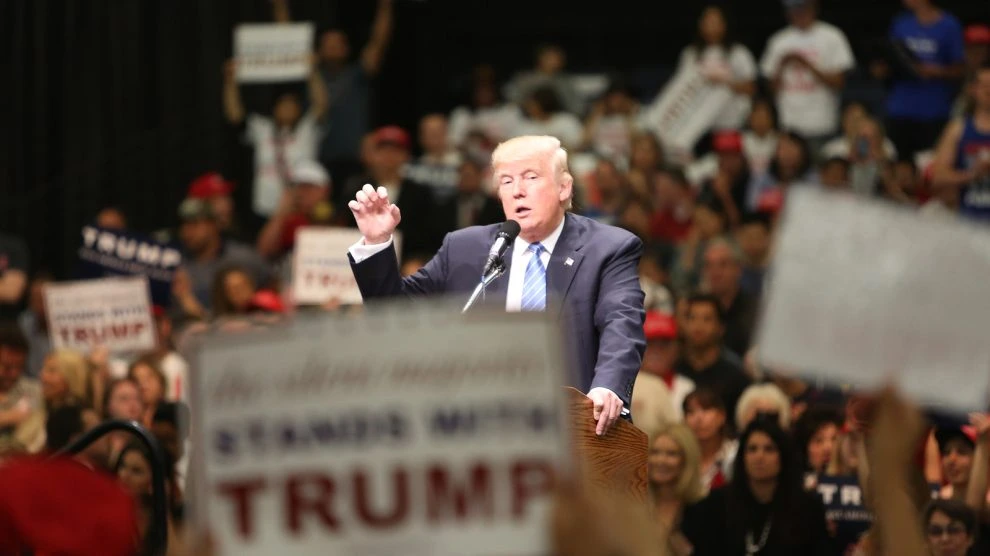
In the United States presidential race, former President Donald Trump won. His return to the US presidency could cause many challenges for the Balkans and the European Union. The EU may face different issues such as growing nationalism, economic difficulties, and rising tensions between political groups in the Balkan region. Furthermore, the foreign policy of the US under Trump’s leadership is often unpredictable.
He first thinks about the benefits of the United States, while some of its decisions also do not prove helpful for US national interests. Trump has a self-centered leadership style. Personal satisfaction matters a lot to him. According to Trump, he can solve every problem efficiently and attain success in matters where others have failed.
Firmly, he served as a real estate businessman. At the time, Trump strongly connected political matters with business development. Trump uses a zero-sum approach in business where his gains come at the expense of others. Many reasons make his leadership style less beneficial for the European Union and Balkans.
The US always follows its traditional foreign policy principles, even with changes in leadership. There are significant shifts that block a Republican-controlled Senate. It includes all those that have harmed US security
To maintain stability in different regions, Europe always relies on the US leadership. This is because the US always takes part in solving European matters. However, if the US becomes less responsive in European matters, then Europe might need to take on more responsibility. In this way, European nations make stronger cooperation with each other, resulting in improved security
Furthermore, more pressure is being added due to growing nationalism and protectionist policies. It is good for European leaders to get ready to face major changes, focusing on becoming more independent.
One of the key concerns is NATO’s stability. The United States is unlikely to leave NATO due to bipartisan opposition; Europe cannot take this for granted. To ensure stability and long-term security, the US needs to build stronger self-reliance with NATO.
The new policies introduced by Trump could cause major changes in the European Union, Balkans, and Ukraine. He may have forced Ukraine to compensate for its lands and accept the peace deals. Furthermore, Trump may cut US military aid to Ukraine. This decision by Trump could hurt Ukraine’s security and increase the intensity of Russia’s Ukraine war. So the European Union needs to strengthen its defense without depending on US security.
He also makes major changes in the economic plans of the US. He aims to increase tariffs on Chinese goods. This decision may lead to a trade war that harms global business. Trump has plans to increase a 10% tariff on EU imports. This increment could harm US-EU relations.
Reducing EU trade with China could raise costs for Europe, making it less competitive and increasing tensions with the US.
For the Balkans, higher tariffs would hurt their economies, which depend on the EU and the US trade. Deporting Balkan workers from the US would cut the money they send home, adding financial strain.
No matter who wins the presidency, the United States’ stance on the Balkans is unlikely to alter since regional stability continues to be a top priority for the country. Although Trump’s mistrust of NATO could result in some changes to the American military’s involvement, significant departures are unlikely because of legislative resistance. Although Trump wants to avoid starting new wars, he may push nationalist governments to adopt more aggressive positions against Kosovo, such as President Vučić of Serbia. But given his transactional style, Trump may pressure Kosovo to compromise in return for Serbia ceasing its attempts to prevent Kosovo from receiving international recognition.
With possible conflicts over Prime Minister Albin Kurti and talks on a land swap with Serbia, Kosovo may experience a rise in Russian influence under Trump. Kosovo has to work closely with the EU and be vigilant. Furthermore, Trump’s fondness for strongmen might result in the lifting of sanctions against disruptive players like Milorad Dodik in Bosnia and deeper connections with leaders like Orbán of Hungary. Despite being hypothetical, these shifts may affect Balkan stability, particularly given Serbian nationalism and Russia’s influence.