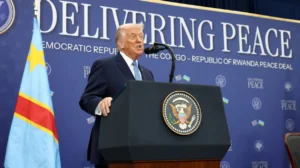
Donald Trump is starting to select his teammates to implement his America First agenda. Loyalty is a top selection factor for him. He believes his national security and foreign policy teams will be loyal. Many people are included on the list of appointments. There are many new figures, such as a defense secretary who was, until recently, a conservative commentator on different news channels.
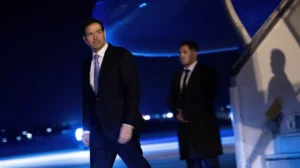
Trump’s choice of teammates shows a sharp contrast. For example, his nomination includes the name of Senator Marco Rubio, known for his hawkish foreign policy, to be secretary of state. He selected Tulsi Gabbard as the director of national intelligence; he was a former congresswoman. Of her complicated views on Syria and Russia, he has received great criticism.
The selection of Donald Trump seems more related to personal loyalty as compared to professional experience. According to Dr. Ian Lesser from the German Marshall Fund, there are some clear policy lines in these selections.
The former allies of Trump didn’t agree with the selection procedure. According to his former advisor, John Bolton, Trump is not looking for loyalty; he wants the people that obey him in every matter without any question. This demand of Trump will destroy his leadership as well as the nation.
All those who raised questions about his policy were fired from his team. There are many well-known figures, such as former Secretary of State Mike Pompeo and the United Nations Ambassador Nikki Haley, who were removed from his list. All selected people should agree with Trump’s every right or wrong opinion. For example, everyone must agree with Trump’s stance on different issues such as the US relationship with China, supporting Israel, and having doubts about aiding Ukraine.
However, Trump has selected some unusual advisors. This includes Pete Hegseth, a Fox News commentator chosen as Secretary of Defense.
Without any direct experience in government, Hegseth appears to have been selected for his loyalty and media presence, demonstrating Trump’s preference for trust and familiarity over conventional qualifications in national security matters.
Hegseth’s recent statement explored that he strongly opposed diversity efforts in the military that aligned with Trump’s opinions.
On a podcast, he referred to the idea that “diversity is our strength” as the “dumbest phrase on planet Earth” in the context of the military.
Nonetheless, a more traditional military background is evident in Trump’s choice of former Green Beret and congressman Michael Waltz as his national security adviser. Waltz’s background working under defense commanders Donald Rumsfeld and Robert Gates makes him a more conventional pick than Hegseth.
Experts like Michael O’Hanlon of Brookings say that waltz is a safer choice, but Hegseth’s vocal rejection of what he calls a “woke” force creates concerns. Generally speaking, Trump’s foreign policy is expected to put “America First,” with a focus on economic competition with China, increased support for Ukraine, and a shift in European goals—all of which are indicative of his nationalistic views.
Trump’s recent cabinet picks follow Washington’s conservative foreign policy, with a special emphasis on NATO and Ukraine. Trump’s skepticism about sustained support for Ukraine has led many Republicans to reconsider this strategy, even if some appointees had previously supported U.S. aid to Kyiv. Trump’s selection of Marco Rubio demonstrates his awareness of his limited authority, especially in Congress. Trump emphasized Rubio’s capacity to handle “Washington gridlock,” implying that after his likely confirmation, Rubio will continue to effectively navigate challenging political polarizations.
Mark Warner, the chair of the Democratic Senate Intelligence Committee, acknowledged Rubio’s intelligence and commitment to furthering American interests overseas, but he expressed cautious support for him despite their periodic disagreements.
Instead of selecting Ric Grenell, a loyal but divisive person with problems with Germany, as his secretary of state, Trump went with Rubio, his more conventional pick. This decision reflects the administration’s shift toward stability and broader acceptability.