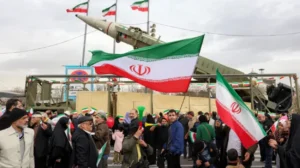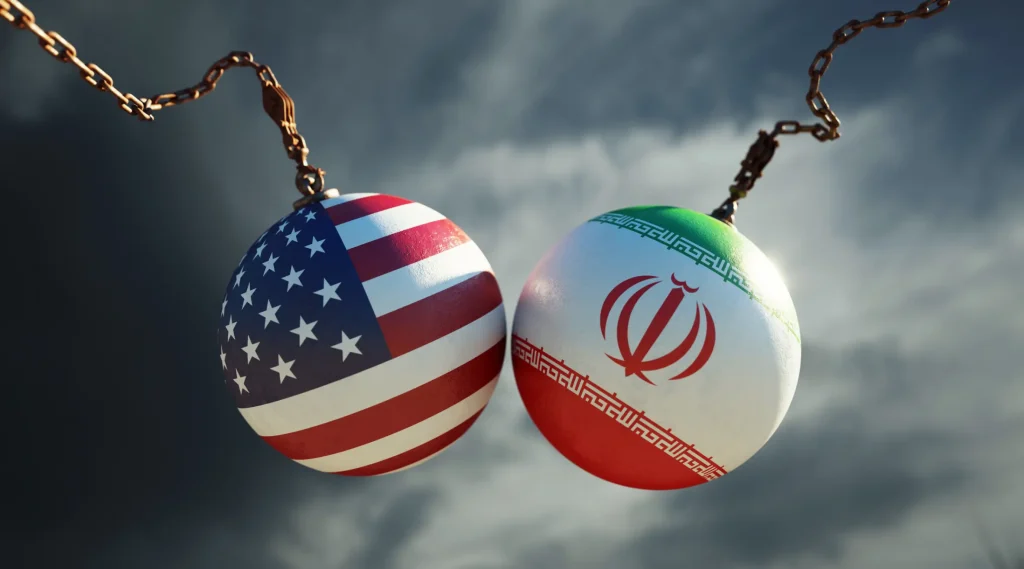
For many years, Iran and the United States have not had a good relationship. The changes came into light during Iran’s revolution. At that time students took over the United State Embassy in Tehran and kept more than 50 Americans there for more than a year. Now that embassy is turned into a museum with the name Den of Espionage. In that museum, Iran shows its anger towards Americans by designing different paintings. Many visitors see a painting of a scary Statue of Liberty with the words “Down with USA.”
The museum’s anti-American stance reflects history: In 1953, the United States assisted in overthrowing Iran’s leader, which allowed the pro-American shah, Mohammad Reza Pahlavi, to come to power. His rule was severe, and he was later ousted during the 1979 revolution. Since then, Iran has faced severe penalties from other nations, isolating it from the global economy and widening the divide with the United States.
Tehran and Washington are the nations that are growing further apart day by day. Iran is a great supporter of Russia during its war with Ukraine. This support led to more sanctions from Western countries. While for trade and diplomacy, Iran wants to make its relationship strong with non-western countries. The conflict between Israel and Hamas also increases tension. Iran blamed the United State that this nation supports Israel causing severe harm in Gaza. While Iran supports Hamas. This is the reason that the relationship between Iran and the United States has become more complex.
In May, the helicopter crash took the life of Iran President Ibrahim Raisi. Due to this incident Iran faces the sudden presidential election. At the same time, the United States confronts uncertainty with President Joe Biden and former President Donald Trump preparing for a November contest. Under two leaders, Biden and Riasi the relationship between the United State and Iran have stalled. This is because both leaders focus on different issues. Experts argue Tehran sees little incentive for closer engagement with Washington, but upcoming elections in both countries may change this situation.
During the time of 1979, Iran and the US both made notable moments of cooperation. This includes logistical support in Afghanistan and successful prisoner exchanges. However the United State did not fulfill the demands of Iran by excluding this nation from the Nuclear deal and imposing new sanctions.
Most of the time leaders are responsible for the tension between countries. But in the case of Iran and the United State there is a deep- seated mutual suspicion between them.
According to Azadeh Zamirirad, “It doesn’t matter who sits in the White House, that’s what you’ll often hear from Iranian policymakers.”
Obama Barack was the former president of the United State believed that dealing with Iran was crucial. He led the United State to sign the 2015 nuclear deal. This agreement officially known as the Joint Comprehensive Plan of Action, with Iran’s then-President Hassan Rouhani, seen as moderate. The aim of this deal is to stop Iran from getting nuclear weapons. In response the United State supported Iran by easing some sanctions on Iran.
In the Biden Presidential era many democrats suggested that he reconsider the deal with Iran. But Joe Biden has not focussed on that or tried to get closer with Tehran. Trita Parsi said neither U.S. candidate is liked by Iran: Biden supports Israel a lot without changing much, and Trump, while unpredictable, might still make deals. Meanwhile, Iran’s leader Ali Khamenei, aged 85, is making sure his supporters stay in power to avoid problems if he dies. Iran might pick another tough president close to Khamenei, even though only one out of six approved candidates wants reforms, and fewer people are voting in elections.
No political leader of Iran wants to improve relations with the United States. But the person who replaced Raisi wanted to improve the ties with America. Parsi highlighted that Rouhani was the only person who was willing to make that investment.
At the beginning Rouhani’s efforts made many promises and proved his opponents wrong. This is when Tehran and Washington reached a deal.
However, the implementation faced challenges, followed by Trump’s withdrawal and Biden’s failure to reinstate the deal. Parsi suggests that today, Iranian politicians are hesitant to prioritize rebuilding U.S. relations, unwilling to invest much political capital in that direction.
The main focus of Iran is to make its relationship strong with Russia and China. Trade with China brings huge amounts on a daily basis. It is about $150. Back to last year when Iran’s economy increased by 4.5%. Despite this increase, many Iranians face economic problems.